


We Have Found Him

There’s a saying that comes out of the Buddhist tradition about encountering one who claims to be the Buddha. “If you meet the Buddha on the road, kill him.”
Because he is not the genuine article, the Real McCoy. Nothing but a fake and an imposter – demonic.
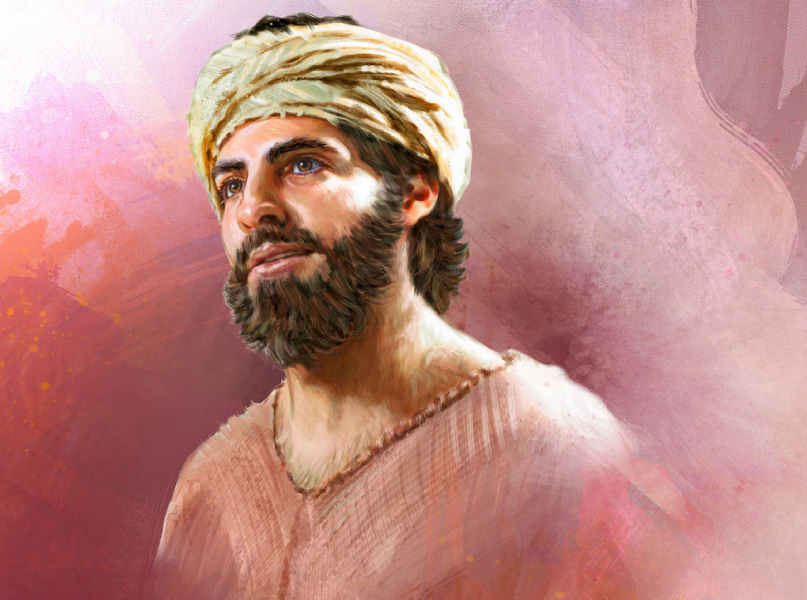
Likewise, it is no wonder that Nathanael is quite skeptical when Andrew and Peter inform him that they have found the Messiah, the One of whom the prophets and writings testify.
With a feeble half shrug, he responds, “Can anything good come out of Nazareth?” A valid question.
Can anything so momentous come out of such an out-of-the-way, nowhere place? Out of such meager beginnings?
If your answer is “no,” you need a refresher course in the history of God and God’s people. For this is how it seems to work all the time. Just so that we don’t think that such wisdom came from our own cleverness or brilliant intuition. Inch by inch out of nothing.
It’s out of the seemingly trivial things that the biblical writer proclaims God’s mighty acts.
It was out of seemingly nothing that the Big Bang erupted into our known universe. From an infinitesimally small speck, entire galaxies, stars, planets, dark matter, centipedes and my lovely wife. And all of you. The whole shebang!
It was out of a meager group of hominoids in Africa, at one point on the brink of extinction themselves, that the entire human race has covered the planet, bringing most other lifeforms to extinction.
Welcome to the Anthropocene Era. Yes, indeed — what can come from such seemingly happenstance early genetic mutations on the African Velt? So long, long ago.
Look at that genealogy of the birth of the Messiah in Matthew.[1] This lineage traces the birth through the male line. Except! Four women are mentioned in all this begetting. All women considered to be of questionable morals or questionable pregnancies, women seemingly of no account.
Again, look at Matthew’s record of Jesus’ family tree.
Tamar, Rahab, Ruth and Mary. All women associated in gossipy minds as women of questionable character. Loose morals. Read of the scandal around Tamar, circulated by wagging tongues. It’s all there in Genesis 38. Likewise, with the other three women of this genealogy. All to show that God does wonders through those who in the eyes of the powerful are considered of little worth, no account. Out of little, a great blessing to all.
Yes, the men involved get off scot-free. Nothing is new under the sun here. Of course, these guys would question, could anything good come of any of this? Out of this sort of women?
Yet, WE, of little account, would boldly proclaim, “We have found Him.”
Mustafa Suleyman, in his new work, The Coming Wave, lays out how wave upon wave of technological achievement, often from what seems insignificant at the time, tends to mushroom into great promise or threat, often both.[2]
What he terms “proto-general-purpose technologies” – pervasive and engendering new, follow-on technologies, beginning from insignificance — have shaped and continue to shape humanity. The human animal is an “innately technological species.”[3] Start with fire, to coal extraction, to the Saturn rocket. Then, the stone ax.
Suleyman notes that “proliferation is the default.” One example, computers.
When mathematicians, mostly underpaid, unrecognized women began using a crude version at Bletchley Park in Britain in the 1940s to crack the German Enigma Code, the computer had its first rude use.
By 1945 a new generation called “ENIAC, an eight-foot-tall behemoth of eighteen thousand vacuum tubes capable of three hundred operations per second,” was crunching data.[4]
Then came the transistor, “comprising a paper clip, a scrap of gold foil and a crystal of germanium that could switch electronic signals.”[5] The birth of the digital age.
Finally, Moore’s law which proclaimed that every twenty-four months, the number of transistors on a chip would double. Now, a 10-million increase on one chip! Exponential growth beyond imagining — a seventeen-billion-fold improvement.
The then-president of IBM, Thomas J. Watson, was said to have predicted that the entire world would probably have no need for more than five or six computers. Now there are more computers than there are humans – in your ubiquitous smart phones. More computing power in your hand than those filling entire warehouses which were used to solve the first atomic equations. For better, and often worse.
Could anything good have come out of such a niche toy? Inch by inch, so it goes.
Can anything good come from the inklings of the Spirit that on most mornings awaken my heart?
Each day with the rising of the sun, I find just enough of Him in my heart to dispel the gloomy clouds of night. Just enough to pull back the covers in Hope that it is worth getting out of bed today.
And usually, this Spirit brings work to my mind before the end of that first cup of coffee. By late morning, all is rich with blessing beyond my poor imagining.
Barbara Brown Taylor, in her book, Leaving Church,[6] describes listening to one’s primal intuition. All of which, led her to leave an insanely busy 80-hour-a-week schedule at a large, downtown Atlanta Episcopal parish for a position in a small, rural Georgia parish in the northern hill country of the state.
Listen to how she describes this leading of the Spirit.
“Intuition may be one way of speaking about how God does that – takes things from here to there, I mean…when I cannot sleep because the rational decision seems all wrong to me, I start paying attention to the gyroscope of my intuition, which operates below the radar of my reason. I pay attention to recurring dreams and interesting coincidences. I let my feelings off the leash and follow them around. When something moves in my peripheral vision. I leave the path to investigate, since it would be a shame to walk right by a burning bush. At this point reason is all but useless to me. All that remains is trust.”[7]
The decision for a move was a life-saver for both her health and sanity and that of her husband. They had arrived exhausted. In that move she found herself, her husband, and in new, unexpected ways, found Him whom she would serve as Lord of Life. New beginnings out of the scrap of a notion, she found.
As the song goes, “See him at the seaside, talking with the fishermen, making them disciples. Amen. Amen.” A seemingly insignificant, rather puny start. Yet, now — spiritual riches let loose for all humanity that would bind us together as one heart. An ethic of equity and mutual regard that is our Guiding Star.
Yes, we mostly fall short. A large part of the Jesus Movement has deserted and succumbed to one of the most corrupt men ever to attain to the American presidency. They gather around the Former Guy as if the leader of a cult. A total perversion of the Word Incarnate – a corruption doomed to pass away. We pray!
But the memory of that distant blessing by the Galilean Sea lingers till this day. It erupts from time to time in unbelievable grace and in incredible sacrifice. Grace upon Grace. Mustard seed Grace. And the hearts who have found Him are filled to overflowing with love and kindnesses for self and stranger. And for the Author of this Mystery.
Indeed, “can anything good come out of Nazareth?”
Can anything come out of any of this, out of any of us? Where might your dreams be leading you? Let fear and hesitations off the leash. Taste and see for yourself. Into Epiphany Light, let God’s Holy Spirit lead you where it will. What do you find when you push back the covers? I find God’s whole people as the entire House of Hope, companions on the way.
My Evangelical friends are wont to say, “Name it and claim it!”
My friend Jim Strathdee’s riff on the summons in a Howard Thurman poem beckons:
“I am the Light of the World
You people come and follow me.
If you follow and love, You’ll learn the mystery
Of what you were meant to do and be.” Amen.
[1] Matthew 1:1-17, NRSV.
[2] Mustafa Suleyman, with Michael Bhaskar, The Coming Wave: Technology, Power and the 21st Century’s Greatest Dilemma (New York: Crown Publishing, 2023).
3 Ibid., 26.
[3] Barbara Brown Taylor, Leaving Church: A Memoir of Faith (San Francisco: Harper San Francisco, 2006).
[4] Ibid.
[5] Ibid. 32
[6] Barbara Brown Taylor, Leaving Church: a memoir of faith (San Francisco: Harper San Francisco, 2006).
[7] Ibid., 8.
January 14, 2024
2 Epiphany
The Rev. Dr. John C. Forney
1 Samuel 3:1-10, [11-20]; Psalm 139:1-5, 12-17;
1 Corinthians 6:12-20; John 1:43-51 “We Have Found Him”
First Star I See Tonight

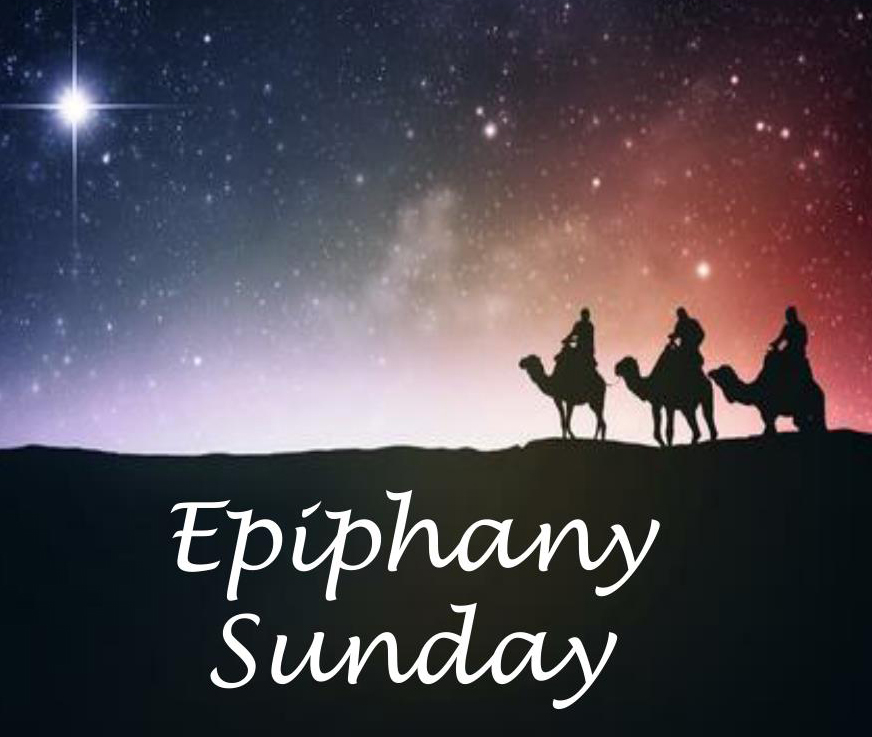
Many of us know that children’s rhyme, “Star light, star bright — First star I see tonight; I wish I may, I wish I might…” We gazed into the sky while the sun slowly sank below the horizon of trees and housetops. The clear sky turning from blue to magenta and then dark orange, settling into a rich violet. “First star I see tonight…”
This weary world yearns for something like a guiding star. As those three sages are said to have followed the Epiphany Star of revelation, we desperately seek to arrive at some saving grace.
The Christ Child we seek this year is not to be found in a manger but under the rubble of Gaza. Covered in ashes and dust, covered in the blood of its parents, brothers, sisters, and neighbors.[1]
As Herod had not clean hands, Israel repaying massacre for massacre has not either. Nor does the Western Church with its blasphemous and corrupt rapture theology which it uses to justify its unconditional support of destruction Netanyahu wreaks on Gaza.
Yes, what Hamas did was evil, but as my mother would caution, “Two wrongs do not make a right.” The savage brutality inflicted on our Palestinian brothers and sisters will have consequences for generations. Their blood will cry out from the ground unto the foreseeable years, unto decades.
Just as the blood of the Shatila Palestinian refugee camp of Lebanon still today cries out — still, from 1982, when on September 16-18, they were surrounded by Israeli forces which blocked all escape while they and their proxy, right-wing Christian militia allies, raped and massacred over 3000, mostly women and children.
Our only hope is that some rays of that Epiphany Star reach deep down through the rubble of history, down through the rubble of our hearts. “First star I see tonight…”
Daily, I search the paper, search my own experience, to find what little rays from that Star there are to be found. And amid the deepest night, I somehow find enough to keep going. To keep Hope alive.
The other day, in our Claremont Courier the lead article was, “This Church Saved Me.” That got my curiosity. We don’t always see churches up for that sort of action. I wondered, what did they do?[2]
I wasn’t surprised to see this congregation stepping up to the plate on the issue of hunger. I had heard that these folks believed in a gospel in action, a gospel “with feet,” as my friend, Pastor Kelvin, likes to say.
Before the pandemic the church’s food bank had been serving a couple hundred a week. That has spiked to upwards of 1,400. This is the pet project of Associate Pastor Zamar Alkiezar and his wife Anna. On Fridays, lines of cars are stacked up along Foothill Blvd. for blocks and blocks.
Their good work is certainly a ray of Hope from that Gospel Star for the homeless and unemployed who have come to depend on it.
It is also a ray of Hope for the 35-some volunteers who take satisfaction in putting their faith to work. Grace incarnate. Joy all around.
One person interviewed, volunteer Arthur Munoz, allowed that he had been homeless. As he “took a break from hefting large boxes of donated food into waiting cars,” he offered, “‘This church saved me.’”
One volunteer with Alzheimer’s disease helps keep the food distribution area clean. “His daughter told [Pastor] Alkiezar that every week her dad looks forward to coming to the church for his job.”[3] In that job is dignity.
The world at times can be in a most wretched state. Just read any Cormac McCarthy novel.[4] Our Advent journey has been through the time of “not yet.” It has been a descent into the bowels of Hell. Not a smidgen of any saving grace to the skeptical eye. Those without rose-colored glasses who dare to have their eyes wide open — they know the wretchedness.
It is precisely such evil into which Christ comes, healing power in his wings. As the prophet long foretold, “Arise, shine; for your light has come, and the glory of the Lord has risen upon you. For darkness shall cover the earth, and thick darkness the peoples; but the Lord will arise upon you and his glory will appear over you.”
I insist on finding the “Good in the Neighborhood.” It’s there in dribs and drabs. If we seek it. If we work for it. Arise. Shine. That is the Star that brightens my life these days as they begin ever so slowly to lengthen. Consigned to be part of God’s “nevertheless.”
Even amid the Gaza ruins, countless aid workers risk their lives to bring what comfort they can. Almost one a day is killed in the bombing, yet they stay.
Rushing stretcher patients on foot through impassable roads. Comforting the survivors who have lost entire families. One family in the south of Gaza, in a supposedly “safe zone,” lost over 90 of its members in one strike.
With few hospitals left operational, doctors and nurses do what they can with the exhausted supplies of antibiotics and pain killers. These desperate efforts are precious Gospel Rays for what little Hope there is for that abandoned Christ Child under the rubble.
As we trudge into the new year, the Gospel Ray of Light from the Epiphany Star will be our companion.
When we met at St. Francis with the folks, clergy and lay, of the Interfaith Communities United for Change, I told them that they were one of my best Christmas presents ever. “You all look like allies,” I said. We will definitely be blessed by the “street heat” they can bring to counter the NIMBY crowd, to counter weak-kneed politicians who will oppose our addiction recovery center, House of Hope – San Bernardino. Brilliant rays of the same Light.
Indeed, “Arise, shine; for your Light has come…”
In Christ we hitch our wagon to a guiding star. Every bit as sure and trustworthy as that Dipping Gourd for those fleeing their slavers, making their journey North.
This season of Epiphany is the season when, in Christ, the whole people of God make manifest through the real stuff of action, inward graces.
Food banks, addiction recovery, speeding ambulances, and in a hundred other ways, in the season of Epiphany faithful people grow into the fullness of the stature of Christ. That is what our readings will be all about in the months to come – that long Green Season. It’s for growth. Not just in numbers but in depth as well. In Spirit!
Yes, “See Him in the temple, talking with his elders—How they marvel at his wisdom. See him at the seashore, preaching to the people – healing all the sickness.”
And see us in His image, making all kinds of good stuff happen as well. Gospel Goodness is what we’re about this Green Season. Anointed with the same Spirit. “Arise, shine, your light has come…” Splinters off that first Epiphany Star. Amen.
[1] This imagery comes from a sermon preached on Christmas Eve, 2023 at Christmas Evangelical Lutheran Church, Bethlehem by the Rev. Dr. Munther Isaac. It may be found on YouTube.
[2] Steven Felschundneff, “This Church Saved Me,” Claremont Courier, December 22, 2023.
[3] Ibid.
[4] Cormac McCarthy, Blood Meridian, No Country for Old Men, for starters. A very, very dark world. If you’re depressed, DON’T read any of these. It would only get worse. .
January 7, 2024
Epiphany Sunday
The Rev. Dr. John C. Forney
Isaiah 60:1-6; Psalm 72:1-7, 10-14;
Ephesians 3:1-12; Matthew 2:1-12
“First Star I See Tonight”
Hey Mary, Whatcha Gonna Call That Baby?


As many of you know, I’m sort of grumpy about the commercialization of the most gracious day that rolls around this time of year. Christmas is the celebration of God’s inbreaking into our often too pathetic human affairs. It’s not for commercial “Christmas creep” — buying a bunch of stuff we can’t afford for people we hardly know, don’t like that much, and that they don’t need.
Despite the “grumpy,” I do allow some early Christmas music to seep into my soul. One of my favorites is the Gospel song, “Mary, Mary, Whatcha Goina Call That Baby?” That gets special honor right up there with Handel’s Messiah – wholesome, spiritual preparation for December 25th!
“Mary, Mary,” a folk hymn with a hundred different versions when it comes to the verses. So, here’s my take:
“Mary, Mary, Whatcha goina call that pretty little baby? Think I’ll call him Jesus. Think I’ll call him Jesus cause he’s gonna save his people.
Think I’ll call him Jesus. Strong to Save.
That might be his name, but he looks a whole lot like Liz Cheney when it comes to saving this republic.
Yes, we couldn’t handle his message so we nailed him to a cross – and Liz Cheney’s party can’t handle her message of warning. She has been politically crucified as well.
She and I, as you all know, disagree on virtually all policy issues. But on one thing, the most important thing, we’re absolutely on the same page – saving this republic.
I’ve been listening to her book on my car stereo system. Often, I find tears of gratitude rolling down my cheeks, listening to what this woman has had to endure from her tribe for standing tall. For doing the right thing – country over party.[1]
“Think I’ll call him Savior,” because we all need a little help here. We need a little help on the democracy front right here. Actually, a lot of help!
Liz Cheney has sounded the clear, clarion call to her party to reject the lies and wackadoodle conspiracy theories swirling around the January 6th insurrection.
In one of the most closely contested elections ever, she notes that Vice President Al Gore graciously conceded defeat. But not Donald Trump!
The Former Guy riled up an enraged, armed mob to storm the House of Democracy.
“But by January 6, 2021, Donald Trump had consumed a good portion of almost every day in a rage: inventing and spreading lies about election fraud, preying on the patriotism of his supporters, and telling them they had to ‘fight like hell’ if they wanted to save their country…
“Some of my Republican colleagues in the House were preparing to use Trump’s stolen-election lies as the basis for an unconstitutional attempt to overturn the election results.”[2]
Tears, streamed down my face. It’s this sort of political courage that will save our democracy.
“Think I’ll call him Savior,” ‘cause we all need a little help down here.
And he pops up into history right at the time needed, when all has gone to rot. In history, for God’s sake. And for ours.
There he is in the stuff of daily existence. We know the time. Emperor Augustus is on the seat of power of the Roman Empire. We know the place –one of the most out-of-the-way places, Nazareth.
And we know to whom: to the most unlikely of women, actually, a young girl. Most likely, barely sixteen or so.
Dropped down out from the birth canal right into the messy stuff of our world. “Think I’ll name him Jesus, for he will save his people.” Glory, Hallelujah! And all the angels, stage left, are readying the refrain: “Glory, Hallelujah.
“Mary, Mary, Whatcha Gonna Call that Pretty Lil Baby?”
Think I’ll call him Emanuel, God with Us.
The present-day hammer of God sounding out danger, sounding out warning.
John, the Baptizer, got it right. The ax is presently laid at the root tree of our human existence. The planet heats up. The planet floods up. Misery is the menu item of the day.
The name might be “Emanuel” but this heavenly presence looks a lot like Jake Bittle, with his warning, The Great Displacement: Climate Change and the Next American Migration.
Our gracious present under the Yuletide tree is the prescient warning of disaster to come if we don’t Stop. Look. And Listen. Read and heed, my dear friends.
We know of the Great Migration out of the South, fueled by Jim Crow. How millions of newly freed African Americans fled the KKK and abject poverty for decent jobs and breathing room in the North.
Jake Bittle writes of a new Great Migration of the same magnitude now in the wings. This time, due to global warming. The science is clear. The time is now. The drowning Florida Keys are the canary in this coal mine.
A migration every bit as fraught as all the real stuff of history, as perilous as that of Mary and Joseph; forced to travel for a census enrollment in the City of David, Bethlehem. That’s how this “God-with-us stuff always happens. In bits and pieces. Dribs and drabs. Emanuel!
Danger and promise, as Mary and Joseph begin their fateful journey.
A bumpy, donkey ride, as pastor Heidi Neumark characterizes it. She recalls a donkey ride she and her son took down the Grand Canyon trail to the floorof the canyon. A ride that caused her to imagine Mary’s ride to Bethlehem.[3]
Time to cue up Ferde Grofé’s “The Grand Canyon Suite” in your mind.
Pastor Neumark and the other travelers were sternly warned, “…the National Parks Service did not guarantee the safety of any participant and was not responsible for any injury, major or minor, brain damage or death, that might result from our journey.”[4]
They had to guarantee that they had no known serious health problems or heart conditions, weren’t afraid of heights and were not recently recovering from open-heart surgery. And, especially, that NO ONE WAS PREGNANT!
And “if you can’t follow instructions and advice — If any of this scares you, get your refund and get out now!” That was the park ranger’s parting shot.
Mary, Mary…such a long road to travel. Watcha gonna call your baby?
As Heidi and her son and their couple of donkeys plodded down to the floor of the canyon, she thought of Mary’s journey to Bethlehem.
Once Mary’ had “said yes to the angel, she signed on for a trip with no way out. No chance to get out now and get her money back.”[5]
“Mary’s journey was just as uncomfortable [as mine]. She traveled on the edge, where injury and death are likely eventualities. The knowledge already pierced her heart. Did she turn her fearful gaze from her feet to the larger view—the seismic shifts in her womb, spectacular as a canyon carved with the signature of heaven?”[6]
Mary, Mary, whatcha gonna call your pretty lil’ baby. Think I’ll call him Jesus ‘cause we all need a little saving down here. Think I’ll call him Emanuel, ‘cause we definitely need God with us. Think I’ll call him Prince of Peace, ‘cause our warfare has been long and we’re sick and tired of the hate. Think I’ll call him Joy, for unto us He will be born a great joy. Gloria! Gloria!
“Think I’ll call him Jesus,” but he’s goina look a lot like you and me.
And, as Charles Wesley, quoting Philippians, put it, “Rejoice Again, I Say Rejoice.” Amen.
[1] Liz Cheney, Oath and Honor: A Memoir and a Warning (New York: Little, Brown and Company, 2023).
[2] Op. cit., 82.
[3]Heidi Newmark, “Mule Ride,” Christian Century, December 12, 2001.
[4] Ibid.
[5] Ibid.
[6] Ibid.
December 24, 2023
Christmas Eve
The Rev. Dr. John C. Forney
Isaiah 9:2-4, 6-7; Psalm 96;
Titus 2:11-14; Luke 2:1-14
“Hey Mary, Whatcha Gonna Call That Baby?”
A Rapid Unscheduled Disassembly


On November 18, on a clear, bright morning sky, the Starship, one of SpaceX’s efforts to launch humans towards Mars, hurtled into space from the Texas Boca Chica launchpad. Within minutes of launch, failure of the main booster to separate led to the termination of the flight.
In the cold, clinical terms of science, the dispassionate control announcer informed us of the explosion – “It was a rapid unscheduled disassembly.”[1] Talk about jargon! This was a classic.
Isn’t that what this third Sunday, Mary’s Sunday, is about? Here comes a most troubling revelation to any girl, an unexpected, unplanned pregnancy. Her world is shattered, dissembled. What sort of message might this be?
Through Mary we are now given a message, the Word from On High, of incredible “rapid unscheduled disassembly” – her world, our world, will be turned upside down. Grace and Hesed (loving kindness) rent the time continuum — God breaking through!
When told she will be pregnant without her consent, Mary is no shrinking violet. She takes one step back and says to this intruder messenger, “Hold my beer and watch this.”
Whereupon she cuts loose with one of the most radical statements of Torah righteousness in all of scripture.” Rapid unscheduled disassembly of the Principalities and Powers. Total ruination of the haughty.
“He has scattered the proud in the imagination of their hearts. He hath put down the mighty from their seat, and hath exalted the humble and meek. He hath filled the hungry with good things, and the rich he hath sent empty away.”
“Sent empty away;” and in that wilderness perhaps they might be prepared to receive this message as one of joy and liberation for themselves as well.
The Advent landscape is wilderness. Astronomical calamity with stars falling from the sky. Mary’s shock at an uninvited change in her circumstances. John the Baptist announcing to the surrounding cities both judgement and promise of one to come.
A Rapid Unscheduled Disassembly of the current order.
It is more often out of the of desperation that we are prepared to perceive the new that is being born. One who will reign with equity and justice awaits at the manger. As one line of my favorite spiritual beckons to the weak and wounded, “If you tarry till you’re better, you will never come at all.”
Mary’s revelation is the inbreaking of God into history. Soon and very soon is the time of the release of those imprisoned. Addiction, violence, racism, impoverishment, sexism. These chains are being cast aside.
To replace the ashes of despair, we are given a garland and the oil of gladness to run down our foreheads in rivulets. This is on the doing of the Spirit of the Lord. This is Mary’s promise.
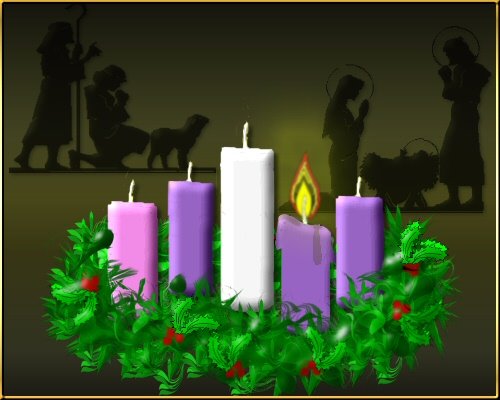
Today is Mary’s Sunday. Let us rejoice and be glad. Light the pink candle.
As in times of old, God continues to raise up strong women on a mission. Agents and harbingers of Rapid Unscheduled Dissembly. Good news to the oppressed and a salve to the brokenhearted. A couple I wish to celebrate this morning. All blessings of God.
Yesterday, I saw the clip of two of those women who in the face of lies and defamation have stood up to the powerful. And did the powerful ever look so pathetic.
Georgia election workers, Shaye Moss and Ruby Freeman, have had the courage in the national forum of public opinion and in the courtroom to challenge the lies and vituperation of Rudy Giuliani. And how this powerful man has been cast down from his throne! How about a $150 MILLION hit to the pocketbook to knock this duplicitous miscreant off his high horse! That’s what the jury awarded last Friday.
These two courageous women did absolutely nothing to warrant the death threats and harassment at all hours of the night. Despite all, these two patriotic women stand tall – beacons of democracy. Ladies, you’re what this republic is all about.
If there is any salvation for our nation it will be due to this sort of lowly election workers who put in long hours for little pay and a lot of grief. For us all. They are God’s blessing to America!
I want to lift up a fearless labor organizer, Mother Jones. She comes directly out of Roman Catholic spirituality. Her family in Ireland was steeped in the teachings of the church.
Mother Jones grew up in an impoverished family, threatened with the fate of starvation during the time of the Irish Potato Famine in the 1850s. Death was all about, forcing her father to migrate to America along with several million others.[2]
One English writer, William Cobbett described the domestic conditions of those living in that Irish rural poverty.
“I went to a sort of hamlet near to the town of Midleton. It contained 40 or 50 hovels. I went into several of them…They all consisted of mud-walls, with a covering of rafters and straw…I took particular account of the first that I went into. It was 21 feet long and 9 feet wide. The floor, the bare ground…No table, no chair…Some stones for seats. No goods but a pot, and a shallow tub, for the pig and the family both to eat out of…Some dirty straw and a bundle of rags were all the bedding…Five small children; the mother, about thirty…worn into half-ugliness by hunger and filth…”[3]
This destitution was not far from that which Mother Jones encountered in the hills and hollers of Appalachia.
When congressional stuffed shirts demanded to know her address, she responded, “My address is like my shoes – It’s wherever I am.”
What was that line about the Son of Man? “The foxes have their holes and the birds of the air their nests, but the Son of Man has nowhere to lay his head.” Because, if born in our time, he would have been out there in the coal fields with Mother Jones causing “Necessary Trouble.”
It was out of this heritage of destitution – virtually nothing – that God raised up Mother Jones to become one of the most fearless labor leaders in West Virginia. It wasn’t for nothing that she was labeled “The most dangerous woman in America.”
Her model was the great humility and compassion of the Blessed Virgin. In her persistence, showing up on most any picket line, speaking words of encouragement, suffering arrest and imprisonment for her activism, she was indeed an instrument of the Rapid Unscheduled Disassembly of the economic power of the coal oligarchs.
We celebrate today God’s gift of strong, prophetic women who persist. They are our Christmas blessing. They are redemption incarnate.
With these women of our Christian heritage, let us magnify the Lord that all might rejoice in a Savior to be born.
With these Fearless Ones, we, too, announce, “The Spirit of the Lord is upon US. To proclaim liberty to the captives, and release to the prisoners; to proclaim the year of the Lord’s favor.”
Today we celebrate God’s gift of strong women who have looked oppression in the eye, taken one step back and said, “Hold my beer and watch this! And light that PINK CANDLE! Amen.
[1] “Starship Takes to the Skies Again,” New Scientist, December 1, 2023. The launch can be watched on UTube.
[2] Elliott J. Gorn, Mother Jones: the Most Dangerous Woman in America (New York: Hill and Wang, 201).
[3] Op cit., 10, 11.
December 17, 2023
Advent 3
The Rev. Dr. John C. Forney
Isaiah 61:1-4; 8-11; Canticle 3, PCP;
1Thessalonians 5:16-24; John 1:6-8, 19-28 “A Rapid Unscheduled Disassembly”
Mostly Silence

In matters of the heart, when it comes to what deeply counts for the soul, Advent is mostly a season of Silence. Oh, there is much background noise, grey noise.
Like the traffic outside my hotel room in New York City at night – easily tuned out. A minor distraction.
Sometimes the news breaks through, but only a story which leads us into the deep silence of an unspoken prayer, maybe deep longing, perhaps a regret. This is the holy silence of Advent. If we truly are attuned to it.
I came home this last Sunday to a story of homelessness among college students.[1] I wasn’t aware of how many of our impoverished students are living in their cars in order to afford an education. In order to do better than their parents’ generation.
“Living in their cars, for God’s sake?” I thought. Is this the best we all can do for these students working sometimes two jobs and at night typing up their assignments at night in a van.
It was a story of a group of students unable to afford campus housing finding community in a campus parking lot, G11, at Cal Poly Humboldt in Northern California. Finding community until the school ordered them off campus.
The president of the college refused to meet with any of them, closing off any possible discussion of alternative solutions. “Just be gone – we don’t care where,” was the official message.
With this, my Advent silence was filled with deep shame. That we, the richest nation in the world, this is how we treat the “least of us?” Shame and sadness overcame me. The angel of Annunciation must be weeping. Our hearts are nowhere prepared to receive the Prince of Peace. “Love Divine” is far. With the author of Isaiah in today’s reading, our lives are rent with sorrow and longing.
“O that you would tear open the heavens and come down, so that the mountains would quake at your presence—as when[2] fire kindles brushwood and the fire causes water to boil—to make your name know to your adversaries, so that nations might tremble at your presence!”
Silence. Waiting.
And in the meantime, we have much to answer for. We’ve made hash of our priorities and a mess of the planet.
The other day at our common meal at Pilgrim Place, our friend Helen Dwyer read for the noon meditation a poem by another of our Pilgrims, Renny Golden, of her hometown Chicago and its river. It is a tale of the deep stain we humans have left across the land.[3]
We’ve come with shovels, dynamite, and bulldozers. We’ve polluted with run-off oil from our streets, plastic bags and who-knows-what-else. We’ve dammed and drained until the fish are gone, and only a fool would now eat any pulled from the muck.
And from that river, it could be mostly any river in America, silence. And in our hearts, in our soul of souls, a silent yearning for what might have been. What once was. And if we have any humanity left at all – deep silence within.
“I spoke to the Chicago River today the way
I talk to God. Not begging. Grateful
as Potawatomi mothers dipping water gourds
“in dawn light, a nod to thank the river.
Who, what were you, I asked the river,
when you were tribal, pure, a companion?
“Silence, like God’s, not even a whisper.
We came with muskets, then shovels, then dynamite.
I asked forgiveness. The dog we kids let out
“near traffic. Its hind legs crippled.
This mutt river wounded with sewage,
oil, crop poison. Same sorrow.
Advent is of two messages – judgement, the need of repentance and the promise of restoration. The babe in the manger grows up, and, if we’re fortunate, so do we in our spirituality.
The words of Isaiah, the promise of End Time Reckoning – this is far beyond nasal chipmunks singing happy Winterfest songs.
In this life not every participant gets a gold medal just for showing up. To the degree we despoil God’s creation, we are all losers. There may be no do-overs. In the damage we do to one another, we are all losers. With tears of repentance and forgiveness, sometimes a do-over.
The ersatz spirituality of shopping mall speakers blaired across aisles stacked with Christmas specials is no substitute for the biblical Advent message folks will hopefully hear in many of our churches. If they have chosen wisely.
In his book, What is Vital in Religion, Harry Emmerson Fosdick relates the story of one man who has seen it all, one for whom the platitudes of an easy faith are an insult to the conscience and to the integrity of experience. I fear this fellow speaks for much of modernity:
“I don’t know what I believe, but I don’t believe all this God is love stuff. I have been in two world wars. I have been unemployed eighteen months on end. I have seen the Missus die of cancer. Now I am waiting for the atom bombs to fall. All that stuff about Jesus is no help.” [4]
The wanton slaughter of Palestinian civilians – women, children, the elderly — picks up pace again this morning. An eerie silence from piles of rubble until we hear the shrieks of horror and sirens.
Truly, the dark night of the soul. Silence shrouds our fears, the misery we nightly witness. Repentance is the only authentic response possible. The beginning of any authentic Advent journey.
These past weeks a friend, a former pastor of Downey First Christian Church, asked me to write a review for his recently published book, Acres of Oak.[5] The title is taken from a quip by the senior pastor of a church he briefly served as an associate, Pilgrim Congregational Church in Pomona, referring to the rows of empty pews in many of our churches. In his book, Pastor Rich narrates his story of his entering the ordained ministry and the congregations he has served,
Pilgrim Church is a very large edifice with a good number of Sunday school rooms, all built with the expectation that when the kids left the Sunday school door, they would enter the sanctuary door. Instead, they just migrated out the door, and shortly after, their parents followed.[6]
In his pilgrimage he has seen the mainline church become a mere vestige of what it once was in its former glory days. One congregation he served in San Gabriel, Mayflower Congregational, founded by three breakaway splinter groups grew to over 900 in the 1960s. Then with amazing rapidity the bottom fell out.
By the 1980s the membership had dropped some 600 members. In 1984 the church had a remnant of only 52 pledging units. Acres of oak, indeed. And high maintenance demands. The world seems to presently have little need of what we once offered.
Even seemingly healthy mega evangelical churches are being rent asunder by conflicting loyalties – to the Former Guy, or to our Lord Jesus Christ. Their youth leaving in droves over this conflict.
These are tough times. Our world, like that of Herrod, is in great anguish. The birth pangs of what we cannot yet fathom.
Expectancy mixed with dread fills the silence of our souls as we scan the morning papers over coffee. No easy answers. Certainly not from happy Jesus music or holiday extravaganzas.
This Advent, at St. Francis, we will gather once more, read the ancient texts, await fulfillment in the silence of passing days. Or maybe join in plaintive hymn: “O Come, O Come, Emmanuel, and ransom captive Israel that mourns in lonely exile here…” And we will work for a better tomorrow for the “least of these.”
But we sing our hymns together in solidarity; and in that I find hope. Hope as small and as powerful as in a tiny baby laid in a manger. Amen.
[1] Debbie Truong, “Living in their Cars to Afford College,” Los Angeles Times, November 27, 2023
[2] Isaiah 64:1-2, NRSV.
[3] Renny Golden, The Music of Her Rivers (Albuquerque, New Mexico: University of New Mexico Press, 2019), 77.
[4] Harry Emmerson Fosdick, What is Vital in Religion (New York: Harpers Brothers, 1955), 1.
[5] Richard Kurrasch, Acres of Oak: A Pastor Rethinks Church in the 21st Century (Chicago: Windy City Publishers, 2023).
[6] Op. cit., 61-62.
December 3, 2023
Advent 1
The Rev. Dr. John C. Forney
Isaiah 64:1-9; Psalm 80:1-7, 16-18;
“What the River Said;” Mark 13:24-37
“Mostly Silence”


