


A Severe Mercy

A favorite scene from “The Simpsons” is when Homer cautions Bart against attempting to cover up something from his mother. “You couldn’t fool your mother on the foolingest day of your life if you had a electrified fooling machine.”[1]
That spark of divinity — dare we call it God? — within each one of us is not fooled any easier than Bart’s mother, Marge. Reality can’t be fooled, for God is in and through reality. Fentanyl is the proof of this severe truth.
Gregory Brown, an African-American man who looks to be in his sixties, has lived on the streets of North Hollywood for over a year. He became unhoused when he caught his girlfriend cheating on him.[2]
“It was several months ago, as he was lying in his tent that he heard a man screaming, ‘She’s dying! She’s dying.’”[3]
Brown recalled rushing out of his tent, shirtless. A woman’s eyes were rolled back, and her lips were blue. He shouted for someone to call the paramedics.
“’I kneeled down and said, ‘God, please, please, save another one.’”
He pumped her chest with his hands, then blew air into her mouth, he said. His tears fell on her face as he continued to perform CPR.
Eventually, the woman came back to life. She looked tired, he said, as if she had been awakened from a deep sleep.
Inside his tent afterward, he was still crying. He thought of his mother, who died nearly two decades ago, and how proud of him she would have been.
Reflecting on his role in saving the woman, he said: “I’m proud to say I did that, and I’d do it again.”
A not unusual day on the streets of the Los Angeles Metropolitan area, the Inland Empire, the San Joaquin Valley. Opioids are the killing scourge of those living on our streets – those whom Sam Quinones calls “the least of us.”
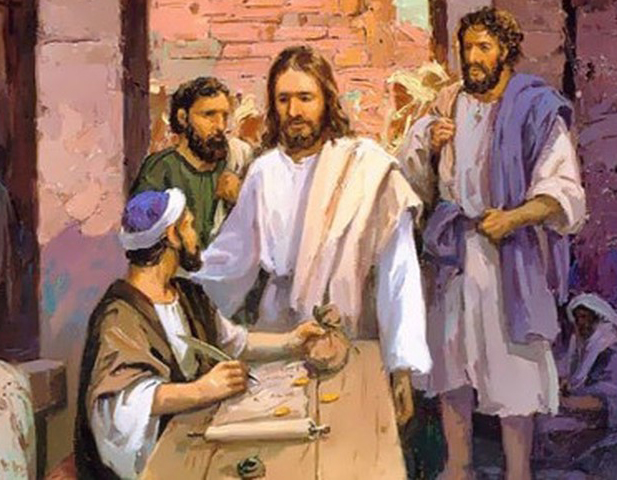
This morning our text from Matthew is all about these folks, the least of these: Jesus calls one of the least, a despised tax collector, traitor to his people, Matthew to be a follower. Sits down at table with him. When berated by religious know-it-alls, he responds that those who are well have no need of a physician, but those who are sick. Go and learn what this means. And while you’re at it, mercy is what is called for. Not sacrifice.
He then heals two women, both considered to be unclean. One assumed to be dead and another with a disgusting flow of blood, suffering from hemorrhages for twelve years. Unclean for sure.
At the moment of urgency, it was Gregory Brown who was Christ of the Streets, agent of mercy.
That’s where House of Hope engages the crisis of “Lives of Despair.” It begins with those of the QRT, at work early in the morning. QRT – Quick Response Team, a group of four: a medical person, a social worker, a clergy person and a police officer or sheriff in plainclothes.
This team, as soon as the new activity of the day begins, is at work checking hospital admitting rooms, jails, courts, the streets – all in the hope of reaching those who had overdosed the previous night.
And what they offer is a severe mercy.
The conversation goes something like this – let’s assume for the sake of our story that “Bob” is the name of the guy found by his housemate on the front lawn at 2 o’clock that morning. Not breathing, blue lips and no discernable pulse.
“Bob,” the leader of the QRT group says. “How are you doing this morning? Do you know what happened to you last night, where you were found? Your friends thought they’d about lost you. This time you came really close to permanently checking out.”
“Do you want to live?” (silence). If you want to live, we’re here to offer you that chance – the chance to get into a treatment program that is serious about recovery – not like the Suboxone clinics you’ve been through. This is a serious, two-year program that will lead you into a whole new life.”
“If you want to live, we’re here to make that possible for you.” Don’t worry about the cost, that’s already been taken care of.” Our only question to you is, ‘do you want to get well?’ Yes, it will be hard. Maybe the hardest thing you have ever done. But you won’t be alone. You will discover a whole new group of friends. True friends who will call you to honesty and accountability. True friends who put their trust in you to be responsible for your own recovery. It’s hard, very hard, but we’re here because we believe you’re worth it.”
“If your answer is yes, as soon as the doctor releases you, we will pick you up – you can come with us and your journey to recovery can begin.”
A severe mercy. Severe, because nothing is sugar-coated. Life hangs in the balance, suspended on the scaffold of addiction. Mercy, because that is the nature of redemption, the nature of second and third chances. Such is the heart of God.
Like Matthew, whether we knew it or not, this is what we signed up for when we enlisted in the Jesus Movement.
And what moves our hearts to engage in this work? It is the memory of the same love we have received. Whether we acknowledge it or not, we are all recipients of second chances. Or third or fourth. Or is it seventy times seven?
It is a way of life that is Life itself. And Life even more abundant returns to fill our souls to overflowing.
In response to my recent letter to the Claremont Courier chiding those who would rather we shoo the homeless off to some neighboring city, came a couple of letters suggesting that we “do-gooders” were naïve concerning this population.[4]
They refuse treatment. They commit crimes. They are mentally ill. It will cost a lot to address their needs. They’re druggies with no incentive to get sober. They present needs that go 24/7, 365 days a year.
Yes, I would admit. All true. But does the shepherd abandon the sheep because of the difficulty of the sheep? The whole point of Jesus calling Matthew is to say, “NO.” His gospel is a preferential outreach to those in need — the sick who require a physician. This is a greater righteousness that goes beyond the letter of the law.
That is our mission to the addicted – to offer a way of Life that itself is a door to Life Eternal. Easy, no. Essential, yes. For our sake and theirs.
Ron Ruthruff – a professor at Seattle School of Theology and an associate with the Center for Transforming Mission for 27 years — tells a grace-filled story arising out of his work there.
This organization in Seattle that works with homeless and runaway adolescents.
“The work was made up of meeting kids on the street and then, through relationships, inviting them in to receive services that could help them exit the streets. A drop-in center included a clothing room, Ping-Pong and pool tables, showers, and laundry — all important emergency services. And a nightly dinner provided a key opportunity to build trusting friendships with kids skeptical of service providers.”[5]
“One evening I noticed a young man sitting alone at a table in the drop-in center. I went over and began a conversation with him. He told me his parents were first-generation Americans from Ethiopia and that they didn’t understand him anymore. He quickly grew silent, feeling he had shared too much, too soon. Trying to reengage, I turned the conversation to food and asked him if there was a good Ethiopian restaurant in Seattle.”
“He told me of a little place near where I live. When I assured him I would try it, he cautioned me: “It’s very traditional; we all eat from the same bowl.” I said I was familiar with the custom, but he shook his head as if to say that I really didn’t understand what I was saying yes to. He held out his hands, dirty from the streets, and asked, “Would you share a bowl with these hands?” Suddenly, this story from Matthew rushed to the front of my mind. This was Jesus in the house of Matthew.”
In entering Matthew’s house, Jesus demonstrates the same radical hospitality that God has shown to each of us. Station, education, race – it all makes no difference. All are invited to table. ALL is what sets apart those of the Jesus Movement — it’s ALL, including us imperfect followers who straggle along. God sets a bigger table than our often too small imaginations allow for. A severe mercy. Ron concludes, “Sitting in Matthew’s home and with a boy from Ethiopia, I see a radical dinner invitation. Jesus, sent from the Transcendent One, shows up to be with Matthew and his friends. No house uninhabitable, no hands too dirty. This is the Good News for us all.” Amen.
[1][1] “The Simpsons,” Season 4/Episode 18.
[2] Reuben Vives, “Homeless people fight to save lives, and stay alive, as L.A.’s fentanyl crisis worsens,” Los Angeles Times, May 31, 2023.
3 Ibid.
[4] Claremont Courier, Letters to the Editor, June 9, 2023.
[5] Ron Ruthruff, “Sitting and talking with a boy from Ethiopia, I received a radical dinner invitation,” Christian Century,” June 5, 2023.
St. Francis Episcopal Mission Outreach
2855 Sterling Avenue, San Bernardino, CA 92404
June 11, 2023 – Pentecost 2
Proper 5
“A Severe Mercy”
The Rev. Dr. John C. Forney
Hosea 5:15-6:6; Psalm 50:7-15;
Romans 4:13-25; Matthew 9:9-13, 18-26
The Synchronicity of Love


This last week the citizens of Claremont were treated to another hateful polemic against our proposed supportive housing development for the unhoused. It was a fearful screed of half-truths and myths about those of us living in back alleys and in cars, in parks and on our streets.
Of course, provide the housing – anywhere else but here. And, mind you, don’t use any of our tax dollars. Send these people to Pomona, Los Angeles, San Bernardino – anywhere else but here!
Despite some of our fearful neighbors, in the face of exclusion, today the Church celebrates a different ethic: The radical Synchronicity of Love –
Trinity Sunday. Through divine relationship Love is busting out all over. A movie title attempted to capture such a simultaneous outburst of events: “Everything Everywhere All at Once.”
Such is the outpouring of Divine Relationship we celebrate today. How? It’s a complete mystery. Far above my humble pay grade to comprehend.
In the gift of Creation scripture attests to its unfolding. The simple fact that there is something instead of nothing is the first work of the Grace of God.
I’ve often said that on this Sunday scores of hapless preachers will attempt to make sense of this theological doctrine we call the Trinity. Heresy heaped upon heresy as pulpiteers stumble over metaphor and simile. I say, instead, let’s enjoy and give thanks for the great interrelationship: Creator, Redeemer, Sustainer – that Divine Glory revealed through the wonder of our natural world and our interactions. See Psalm 8!
Or, as the Jewish mystic, Martin Buber, proclaimed: God is Relationship. Everything Everywhere All at Once – a Synchronicity of Delight.
One cannot take a float trip down a river through the interior of Alaska and not be overwhelmed by it all. Whether it is the brilliant display of bluish-green northern lights dancing through a velvet-black sky studded with stars beyond imagining, or a startled golden eagle that launches itself into flight as you come around a bend – soaring just feet above your head with its magnificent wingspan of over six feet. Enough to take one’s breath away!
It is all an overwhelming synchronicity of delight. No less than the disarming smile of a young child or an old friend.
It’s also butterflies.
As a young boy I went through a butterfly phase, spending hours going from yard to yard with my enormous butterfly net, catching and mounting swallowtails, monarchs, dusty millers, skippers, viceroys… I knew most by sight as they flitted from flower to flower.
It was with delight that the other day that I came across the story of a woman who has played a large role in bringing back from extinction the Palos Verdes blue (aka PV blue), a small butterfly, the size of a thumbnail, once thought to be extinct It is a beautiful cerulean blue with a white underside.[1]
It all began for Jana Johnson at a time when she had to reinvent her own life. Her marriage was failing. She had two small boys to raise and her finances were about depleted. Her small stipend as an assistant to a UCLA professor wasn’t making it. Her PhD dissertation on lizards that survived the fire season was going nowhere. Apparently, not enough lizards.
She recounted to her therapist a recurring visual of hanging to the side of a cliff and attempting to catch her sons as they would fall off and fling them back to the top.
Her therapist told her to change her visualization. “Pretend,” he said, “you’re standing at the edge of the cliff, not hanging off the side. There’s a net below, he promised. She just couldn’t see it yet.”
And there it was — that net: the professor she had worked for was a renowned lepidopterist, a person who studies butterflies. Professor Rudi Mattoni had discovered the PV blues some 11 years after they had been declared extinct — as he and another entomologist, Rick Rogers, were doing a routine survey of insects on the Palos Verdes Peninsula.
Walking through a field of a naval petroleum depositary yard, close together, Rick had come to a sudden halt. “Rudy, look at that! There’s a blue.”
“Rudy had to catch it before he was certain. But then he looked at me and gave a shout. ‘We just got the jackpot! We won the lottery! Do you know what this is, kiddo. (He always said kiddo.). ‘This is the Palos Verdes blue butterfly and he is alive right here!’”[2]
Habitat destruction had virtually wiped out the species except in this one, miniscule location, where the soil was regularly disturbed by bulldozers to keep down weeds. The two plants on which the butterfly caterpillars feed require some disturbance to keep down other vegetation which would choke them out. Before human habitation, regular fires performed this disturbance. Being part of a naval base, this small plot had remained isolated, and the Navy had been using bulldozers to keep down the weeds. That’s the only reason the PV blue had hung on in this small, isolated location.
Dr. Mattoni received permission to collect a few of the remaining blues for a captive breeding program. Enter Jana Johnson, whose job became caretaker and babysitter for the critters. She developed and improved the protocol for raising the insects, soon producing several thousand per season. This work also became the subject of her re-envisioned PhD dissertation, completed 2008.
All the while she was raising butterflies, she had two boys to raise as well. Both are now fine young men, one just finished college, the other still at his studies.
As with butterflies, Jana found having a team to raise her sons was also essential. One day a friend suggested she take the boys to Moorpark Zoo, a teaching facility of Moorpark College. After receiving her PhD, she was eventually hired by the college for a summer position and eventually given a space at the zoo between the lion and tigers. There the Butterfly Project was housed.
Did her sons suffer? Both say that hanging out with Mom through her all her trapsing about was totally “cool.” “Our family vacations were usually work trips for her. She’d work in the field, and we’d follow looking for bugs and birds and lizards and stuff,” her oldest said. “And being with a mom so passionate about something gave us an incredible work ethic. We just liked being around her.”[3]
These boys and their mom had the delight to learn more about the splendor of the gift of creation than most any of us. That is the wonder we celebrate this Trinity Sunday. Nature, a mom, a mentor, two growing boys and butterflies…what could be a finer version of the story of creation for our time?
Now at fifty-four, and a tenured professor at Moorpark College, Dr. Jana Johnson did find that meaningful work that she could be passionate about, friends to help with her butterflies and her boys – there was that promised safety net.
I sometimes take a few moments to drift down memory lane, seeing in my mind’s eye Artie and Jack and myself with our butterfly nets desperately lunging after a dazzling yellow swallowtail hovering lazily just above our heads.
The earth is in trouble. So says the headline in the morning paper. We have blown past seven of eight safety limits. The headline blared, “The Earth is really quite sick now.”[4] Here in Southern California, it seems between May Gray and June Gloom, we’ve hardly seen the sun in days – or at least so it seems. Global Weirding for sure. “Majority of Californians fear worsening weather extremes,” cries another headline.[5]
It could all be cause for despair and giving up. Then I opened my new issue of The Sun. The interview was with a Rebecca Priestley, environmental scientist from New Zealand. After completing her PhD in the history of science, she went on to earn a masters degree in creative writing, using those skills to effectively communicate the realities of climate change.
She describes a seminal moment when the reality of global warming hit her. Doing research in Antarctica, at the New Zealand research station at Scott Base, she and several colleagues were watching the news from New Zealand in the bar before dinner. The newscaster was showing pictures of folks going to the beach and eating ice cream that summer in a place known for being notoriously cold and damp. Instead, it was a balmy 90 degrees Fahrenheit.
“I looked around the bar at Scott Base, where just about every science project was about climate change or in some way connected to climate change, and there were no smiles on faces. People were shaking their heads.”[6]
She and her family have begun making the little changes they feel necessary. Her husband rides a bike to work. Planting trees. When a car is needed, they use a ride-sharing service. They’ve cut down air travel. Yes, changed light bulbs.
“It doesn’t help to dwell on worst-case scenarios. If the problem seems too enormous, some people feel paralyzed or even give up and say, ‘Lets just get drunk and enjoy ourselves, because we don’t have long.’”[7]
Her long-term solution? “We need national governments and regional governments to take the lead. We need to vote for people who are going to promote change. The market will not respond fast enough to make the necessary changes.”[8]
Such thinking honors my understanding of Trinity Sunday – all of us working, individually and together, for systematic change.
Governor DeSantis, this is not “woke” politics. It’s today’s reality. And frankly, between you and Disneyland, my money’s on the mouse. Through a synchronicity of love and political action, we, as cooperators with God, can do this.
Butterflies or climate activism, it all adds up. As St. Augustine somewhere said, “Faithfulness in the little things is a BIG Thing.”[9] Dr. Priestley is right — for us older folks — it’s not OK to dump this problem in the laps of the younger generation and walk away. We can all do something to raise awareness and political will.
The ocean may be rising, but, as my friend Jim Strathdee writes, “the Ocean of Love will overcome.”
That’s my story, that’s Rebecca’s story, and we’re sticking to it. A blessed Trinity Sunday to you – a Synchronicity of Love — all joined together with all who revere this marvelous gift of Creation. Our friend Lynn constantly reminds us, “We’re all in this together.” A most Blessed Trinity Sunday! Amen.
[1] Jeanette Marantos, “Endangered butterfly helped her to take wing,” Los Angeles Times, May 31, 2023
[2] Ibid.
[3] Ibid.
[4] Seth Borenstein, “The Earth is really quite sick now,” Los Angeles Times, June 1, 2023.
[5] Hayley Smith, “Majority of Californians fear worsening weather extremes,” Los Angeles Times, June 1, 2023.
[6] Dash Lewis, “Don’t Panic: Rebecca Priestly on Finding Hope Amid the Climate Crisis, The Sun, June, 2023. 7.
[7] Ibid.
[8] Op cit., 8.
[9] Luke 16:10.
St. Francis Episcopal Mission Outreach
2855 Sterling Avenue, San Bernardino, CA 92404
June 5, 2023 – Trinity Sunday
“The Synchronicity of Love”
The Rev. Dr. John C. Forney
Genesis 1:1-2:4a; Psalm 8;
2 Corinthians 13:11-13; Matthew 28:16-20
A Glory Attack


The other day as I was driving down Central Avenue in my newly repaired van (that’s another story), I was enjoying immensely the clear skies and the view of the mountains. I had on the blues station and was feeling completely at peace having had a very successful trip to West Virginia raising money and friends for House of Hope – Ohio Valley. Time seemed to stand still with promise and perfection. I was having what my friend Ed Bacon would call a “Glory Attack.”
It’s the experience that can come upon driving through the green hills of West Virginia. John Denver got it right – Almost Heaven. Yes, a “Glory Attack.” That is the sensing of the presence of the Spirit that animates all creation, moving through both it’s beauty and pain, opportunity and challenge. It’s like the Powdermilk Biscuits of Lake Wobegon: “gives shy persons the strength to get up and do what needs to be done.” And like those fabled treats –”Heavens, they’re tasty, and expeditious!”
This same Spirit also energizes a disparate people to become the Gospel Power of the Jesus Movement. Today we celebrate the gift of the Holy Spirit to the Church. Today is the birthday of the Church. And with that, all gathered to hear Peter’s sermon, as recounted in the Book of Acts had a massive Glory Attack. Each heard in his or her own language.
When I worked with Progressive Christians Uniting, we had a program, “Swimming Upstream,” to enable small churches to reclaim their mission — in fact, their reason for being.
One morning I received a call from our director Peter asking if I would return the call of a United Methodist Pastor with a question about rejuvenating his church. “It’s out in Riverside. That’s your territory, John. See if we can help him.”
I drove out there and found an old white wooden clapboard structure with a side bell tower. This looked like it was right out of a small prairie town in the Midwest. I had arrived early to have a chance to drive through the neighborhood. Some of the streets were still unpaved. There were all sorts of kids around playing ball and other things.
When I finally met the pastor at the front door, he began immediately telling me about the problems of his congregation. They were old and tired. Most of all, that dwindling band was discouraged. The heart had gone out of them. Definitely NOT a vibrant outpost of the Jesus Movement!
As I went downstairs into the social hall, I took note of an arrangement of photos on the walls on both sides. I said to the pastor, “These folks don’t look that old to me.” He responded, “John, these pictures are almost fifty years old.” Yeah, I guess they were old. Very old.
Most of these people would now be in their seventies and eighties.
As the pastor showed me around their campus, we came to a two-story building which used to house a growing Sunday school in second floor classrooms and the downstairs had a huge basketball court. A regular gymnasium that could also be used for large dinners.
I asked the pastor, with a facility like that, had they considered an after-school program to provide something for all the kids I saw in the neighborhood. No. Nobody had even thought of such a thing. No, nothing for kids. They hadn’t had a Sunday school in years.
Did they hold any English classes at night for adults? Any citizenship classes? I had seen what looked to be many Hispanic children in the neighborhood. No. No classes for the parents.
No Bible study, no prayer circles. No nothing!
No wonder this church had dwindled down to nothing.
I shared with him a couple of things. First, I had gone to seminary with his bishop. Maryann was a good friend. If he would like, I could give her a call and see what resources she might have to allow the hiring of a lay person to begin some activities for the kids. If the person could be bilingual, English and Spanish, so much the better.
Secondly, I could draw up a plan to envision a brighter future, send it to him and he and I could go over it and see where the congregation might wish to begin.
A couple of weeks later I had had an opportunity to talk with Bishop Swenson. Told her that I had received a call from one of her United Methodist pastors and told her of my assessment of the situation.
Yes, she did have a pot of money which could be used for this, and if the congregation was serious about finding its mission and growing, she certainly would want to help. Yes, money was available.
I quickly called the pastor with this good news. He now had some ideas and the beginning of a plan. He had the resources. All the congregation – which claimed it was too old and feeble to do anything at all – had to do was to open the door. Give permission.
Weeks went by and I heard nothing more. Soon months. I began to wonder if the pastor had had a health problem or something. I sent email inquiries to him, wondering what had been the congregation’s response. I offered to come out to one of their board meetings and answer any questions. Nothing.
Finally, after almost half a year I received a very sheepish call from the pastor. Yes, their board had considered the proposal and the ideas for a revived ministry. BUT…they were too old.
Even though nothing much would have been required, they felt they were too decrepit. Actually, too afraid. Even that minimal change was too daunting.
Later, the next year, I heard that they had closed the doors and the property was sold.
Alas, no Glory Attack for this dispirited group.
Was it that the Spirit was not speaking, not prompting? Or was it that fear drowned out the summons? Again, no Glory Attack here.
Unfortunately, my friend’s congregation could not get there. Too far outside their comfort zone.
But we are not left to our own devices. Despite fears and hesitations, the Spirit blows through. Shaking us out of our doldrums, enlivening our imaginations. Bringing new life.
When we consider the gift of the Spirit – this is the way the Bible storyteller has of telling us that the power of Love and Abundant Life we had witnessed in Jesus could not be contained in death. It was now let loose in all the world to prompt, to guide, to encourage. As it always has been.
The Hebrews knew the Spirit as the Breath of God, Ruah. By the way, Ruah is a “she.” She danced before the Mystery of All at the beginning of creation, and at the manger of a babe in Bethlehem. And at the birth of every newborn.
And how do we contemporary followers of the Jesus Movement appropriate that power and grace for living our days? The revelation on the Emmaus Road tells the church everything it needs to know.
In the sharing of the journey of faith over the generations as told in scriptures and appropriated for today, AND in the breaking of the bread and fellowship around the table. That’s where you will meet the Risen Christ. More often than not, as a stranger in your midst. Just as those original travelers on the road to Emmaus knew him not.
That is the beauty of small congregations like the one I serve in San Bernardino, California. We are family to one another. It truly is “Blest Be the Tie that binds our hearts in Christian Love.”
I had the blessing to conduct the service and preach at Christ Church, Episcopal, this past week in Wellsburg, West Virginia. That’s right near where our House of Hope will be located in the Northern Panhandle.
It is where I usually worship when in West Virginia on a Sunday, and I told them and Bishop Cowden that I would certainly be willing to fill in since they had lost their clergy.
Of course, I gave an update on our addiction recovery center, House of Hope, during the coffee time after service. As I was getting my coffee and some munchies there was a little meeting going on off to the side. After I had sat down, a member of the vestry informed me that the parish had decided then and there to become a “partner in recovery,” supporting the work of House of Hope. They had decided to purchase ten copies to share of Sam Quinones book, The Least of These, to learn the scope of the problem of opioids and methamphetamines. A GLORY ATTACK!
At Christ Church, like ours in California, I suspect that most have known one another for years. And with theirs, like ours here in San Bernardino, we ARE NOT TOO OLD.
Right there in Wellsburg – a Glory Attack. Gumption engaged!
A Glory Attack right here in San Bernardino. Gumption engaged!
Sunday after Sunday, week in and week out, we are in fact, Christ to one another. Each precious in the Lord’s sight and each precious in the sight of the others at this communion rail.
The beginning of Pentecost Joy is the knowing that the Power for Life of the Risen Christ is alive in us as gathered community. WE are now the Body of Christ, with all the fortitude and gumption bestowed by Powdermilk Biscuits. Here and everywhere when the prompting of the Spirit is heeded. Amen
St. Francis Episcopal Mission Outreach
2855 Sterling Avenue, San Bernaridno, CA 92404
May 28, 2023 – Day of Pentecost
“A Glory Attack”
The Rev. Dr. John C. Forney
Acts: 2:1-21; Psalm 104:25-35, 37;
1 Corinthians 12:3b-13; John 20:19-23
An All-Encompassing Love


As we come to one of our signature Hallmark holidays, Mother’s Day, I first want to salute all the moms out there.
I know that my mother was the person in our family I could count on to buffer our family from my father’s outrageous tirades and irrational behavior. She was our intercessor. She, in moments of family strife was instrumental in keeping it all together. She was long-suffering. She remembered those little things that brought delight to our lives and had a good sense of humor through most of it.
She and I could play gin rummy for hours. We kept a tab on who was winning and not. I rarely, if ever, beat her. She was one in her family who should have been sent to college, but was shipped to Stockton for “business school.” Aunt Donna, the oldest, went to college and became quite an organist. She inherited the family genes for music ability, Grandpa having gone to Julliard for voice. Music was definitely not Mom’s gift.
It is the fierce love of mothers who, if anything, saves the planet. It is that Supreme Love known through Jesus and the gift of the Spirit as known through our mothers we salute today. It is that love through which we first know the Love of God.
In Acts we find Paul on a missionary tour to Athens. As he walks about that magnificent city, he notes the many religious shrines to various deities worshipped in that metropolis.
“I found among them an altar with the inscription, ‘To an unknown god.’ What therefore you worship as unknown, this I proclaim to you. The God who made the world and everything in it, that Master is Lord of heaven and earth, does not live in shrines made by human hands, nor is that God served by human hands, as though anything were lacking, since this God gives to all mortals life and breath and all things…In this God is not far from each one of us…in this God we ‘move and have our being.’”
In the course of human events, it is this Sublime Reality made known to us in the life and message of Jesus. It is the Care and Nurture first made known in our infancy through a mother’s love and care. Through her, the Word becomes flesh for most of us. Through our mother or a surrogate standing in her place.
In our topsy-turvy world these days, when our government could be led into bankruptcy for failure to pay its debts, through the dysfunctional politics that keep us from addressing any of the existential threats which confront human survival – as we opt to “kick the can down the road” instead of come to real solutions – it will be those little touches of humanity from the women who have brought us thus far that will suffice, must suffice.
I’ve lately been reading up on such possible disasters, as we get ever closer to a fiscal catastrophe – June first, we’re told, is when the money runs out. Cupboard empty. Well’s dry. Butkus. “Tha…tha…that’s all, folks.”
Maybe it’s just my warped personality that takes some solace in looking ultimate disaster in the face and wondering if we’re seriously going to go over the cliff. Maybe it’s the suspense that intrigues, the glimpse into the void of nothingness that captivates.
In his book, Precipice: Existential Risk and the Future of Humanity, Toby Ord outlines in chapter and verse those scenarios of doom that could forever consign the human race to an “might-have-made-it” species in the history of extinction. He notes what we all know – our technological grasp has far exceeded the reach of our wisdom as a species.
While there are natural risks awaiting in the future such as supervolcanic eruptions, asteroids and stellar explosions, of which we have little or no control, there are risks that are completely anthropogenic, human
induced — pandemics, nuclear war, artificial intelligence, global warming and other environmental damage. Yes, if you’re a disaster junkie, it’s a veritable feast of what could possibly go wrong. And we as a race seem to be so lacking in the wisdom to respond.
How close? you ask. Let me relate Ord’s retelling from the Cuba Missile Crisis of the Kennedy years.
As the pictures of Russian missile instillations were unveiled in that tense United Nations Security Council and the presentation by Ambassador Adlai Stevenson — as the U.S. Navy prepared a blockade of Cuba, the Russians had already assembled a counterweight of four submarines lurking in the depths off Cuban shores, each armed with a nuclear torpedo to wipe out the American fleet. Meanwhile, the United States had gone to DEFCON 2, the next step to nuclear war.[1]
How close?
Ord continues the story:
One of those four ships was captained by a Soviet officer Valentin Savitsky. It was at the command of this single man that the fate of the world hung in the balance. His submarine had been detected by U.S. mine sweepers which began dropping low-explosive depth charges to force it to surface.
Commander Savitsky’s boat, hiding in the depths, had been out of radio contact and the crew had no idea what was going on above the surface. Had war already started or not? Conditions on board had become dire. Temperatures ranging from 113 degrees F to near 140 degrees in the engine room. Carbon dioxide had built up causing numerous members of the crew to collapse unconscious.
One of the crew members recalls the terror, “’It felt like you were sitting in a metal barrel, which somebody is constantly blasting with a sledgehammer.’”
“Increasingly desperate, Captain Savitsky ordered his crew to prepare their secret weapon. ‘Maybe the war has already started up there, while we are doing somersaults here. We’re going to blast them now! We will die, but we will sink the all—we will not disgrace our Navy!’” he told his crew. The political officer, who had half the launch code, agreed.[2]
It so happened that the commander of that flotilla of four submarines was stationed on Savitsky’s ship. It was he who refused consent to launch. It was he who talked Savitsky down. The “eve of destruction” hinged on the humanity of one person in that moment. One person!
Would Savitsky have gone through with this doomsday decision? We don’t know how close we came to letting that genie out of the bottle.
Meanwhile, while my father was talking of building a bomb shelter in our front yard – after all, we lived only a couple of miles from a major aircraft factory, Douglas Aircraft – it was my mother who consoled us kids that whatever happened, she was there. That evening we had our favorite after dinner snack, milk and toast. As we sat glued to the TV over those hair-raising three days, it was she who convinced us that whatever happened, she was there. Our family would make it through this.
It was through our mother’s love, her tender arms wrapped around us, we experienced Blessed Assurance. We would somehow be okay. We would get through this.
Fortunately, good sense prevailed. Kennedy agreed not to invade Cuba and Khruschev removed the missiles. We all took a deep breath and survived to live another day. You who are of my generation will not forget those days.
The love of an unknown God? It was Mom who made that love known and palpable. We could taste it. It permeated our fears and allowed us to get to sleep over those three nights. We might not have known the extent of the danger but we sure picked up on our parent’s unspoken anxiety.
What was unknown, Mom made real. Every bit as much as Paul when he opened Athenian eyes and hearts to the God who is through All and in All. And the Love of God made real through the prophets and the ministry of Jesus.
In the lead-in to Mother’s Day, I always recall one of our ancestor’s Mother’s Day proclamations. A relative on my mother’s side of the family, Julia Ward Howe. Grandma was a Howe. So much more wholesome than sloppy Hallmark sentimentality.
Hear her proclamation that reads, in part:
“Arise, all women who have hearts, whether your baptism be that of water or of tears! Say firmly: “We will not have great questions decided by irrelevant agencies, our husbands shall not come to us, reeking with carnage, for caresses and applause.”
“Our sons shall not be taken from us to unlearn all that we have been able to teach them of charity, mercy and patience. We women of one country will be too tender of those of another country to allow our sons to be trained to injure theirs.”[3]
It is an expression of a fierce love, that those cherished and precious not be squandered in needless war.
Another mother’s fierce and determined love comes through in the stories of a woman who has spent her entire legal career as a public defender. More than a counselor, she has been a mother to those she has represented, giving them the same fulsome support a mother gives her young, and not-so-young when they need a kick in the pants.
Robin Steinberg, having served for years as a public defender, tells one of the most heartbreaking stories of a loss. The case involved a client, Martin, a Jewish immigrant from Russia. Martin had been accused of the rape of his nine-year-old nephew, his sister’s son. The police officers, in an interrogation after issuing Martin his Miranda rights, stated that they had a confession.
Unbeknownst to those officers questioning him, Martin had worn a wire. He had the whole thing on tape. When Robin attempted to introduce that tape as evidence, the judge, who already demonstrated great hostility to her client and to her, insisted that the FBI verify its authenticity.
They found that it was authentic, except for a splice. Something had been removed. In fact, Martin had removed a brief disparaging comment he had made about his mother. When a second copy of the tape was submitted, it was found to be entire and legitimate.
By this time the police had lawyered up and pled the 5th. Which meant the tape of their lying concerning a confession, showing that nothing had in fact been confessed by Martin, was inadmissible. The boy had been sexualized through watching hours of his father’s porn. The recent divorce of his parents had traumatized him. And though the boy’s testimony was highly questionable, though the purported admission of guilt was shown to have never taken place.
Listening to the tape, “The officers questioning Martin used every tactic they could to get him to confess, even threatening to kill him and ‘float him down a river, facedown.’ Despite the pressure and the threats to kill him if he didn’t tell them what they wanted to hear, Martin denied that he did anything. Over and over again…at the end of the tape, I realized that Martin had never said what the police alleged he had said. The confession was a complete fabrication.”[4]
The judge sentenced Martin to fifteen years.
The result was devastating. Robin concludes her story, sorely tested by the tragedy of this defeat, but defiant. “Certainly,” she writes, “after the defeat in Martin’s case, I could have walked away, but I knew that if I did, I would not be able to live with myself. It’s precisely in those moments when things get hard that you have to dig deep, remember why you do what you do, and find the resilience to continue. Sometimes justice requires finding the courage to stand alone.”[5]
And that is what mothers do.
In their solitary advocacy, they make known a greater Love at the center of all. The source of this greater Love is NOT unknown to those of us of the Jesus Movement.
So, today, whether you were given a white or a red rose upon leaving a worship service, you know in your heart of hearts a Power deeply known through a mother who believed fiercely in you. I sure have such memories. Thank you, Mother.
By the way – the Cuban standoff with Russia was over way before Dad ever turned over a spade-full of dirt for his bomb shelter in our front yard. Sometimes there are happy endings. Mom’s wisdom prevailed. Again, thank you, Mother. Amen.
[1] Toby Ord, The Precipice: Existential Risk and the Future of Humanity (New York: Hachette Books, 2020) 4.
[2] Ibid.
[3] Julia Ward Howe, “Mother’s Day Proclamation,” 1870. This was a call for mothers to leave their homes for one day a year and work for peace in their communities.
[4] Robin Steinberg and Camilo A. Ramirez, The Courage of Compassion: A Journey from Judgment to Connection (Optimism Press, a division of Penguin Random House: New York, 2023), 70. Had there been no tape, the author admits she probably would have believed that Martin had made a confession.
[5] Ibid, 89 ff.
May 14, 2023, Easter 6
“An All-Encompassing Love”
The Rev. Dr. John C. Forney, St. Francis Episcopal Mission
Acts 17:22-31; Psalm 66:7-18;
1 Peter 3:13-22; Gospel: John 14:15-21
Lord, We Do Not Know Where You are Going


When I was in sixth grade, I became a Boy Scout. That was a bit of a difficulty as they had a fee to be paid and my dad wasn’t interested in anything if it wasn’t free. Mom prevailed.
I was put in a patrol with other newbies and, though our leader was an older boy in junior high, his leadership skills were sadly lacking. As we approached the date for the big jamboree, a week-long camp for all the Scout packs in Southern California at Camp Pendleton, every planning meeting of our patrol dissolved into aimless horsing around. We were supposed to come up with a menu for all our food for our patrol. It’s a wonder we had much of anything when the day of departure arrived.
We had a couple of boys totally committed to finding snakes to capture. Gather firewood for the evening meal? No, they were off hunting snakes. Helping with cooking? No, they were off hunting snakes. Policing up the trash, no. Yeah, you got it…
We discovered one morning, since we had not had much of any dinner, and no one had started the campfire, and the snake boys had raided the food container in the middle of the night and eaten the breakfast sausage raw, we had only some raw potatoes to gnaw on. This camping experience was going downhill fast.
Some of you know that I don’t do too well in the heat and sun. Well, at our Sunday worship service, out in the blazing sun, I got sunstroke and passed out.
To top it off, on the way home, later that morning, the Marines had set up a display of tanks and other assorted military equipment for us. We were far too young to realize that this was all a ruse to glamorize military culture and entice us into enlisting fifteen years down the road. Yeah, “Good Morning Vietnam!”
Crawling through tanks, and armored personnel carriers, looking at all the neat rifles and machine guns, my attention deficit disorder had completely kicked in and I didn’t realize that the rest of our troop had already headed back to the cars. Until I began looking for my buddy, Dan, and couldn’t find him anywhere. Until I couldn’t find anybody else from our troop. Panic! They had all left me. I was totally lost. My heart raced and my mind fogged over as I ran all over the exhibit looking for anyone I knew. Nobody! I was utterly on my own.
In our passage from John, the writer narrates Jesus’ attempt to prepare his followers for his absence, when he will leave them.
“Do not let your hearts be troubled. Believe in God, believe also in me. In my Father’s house there are many dwelling places. If it were not so, would I have told you that I go to prepare a place for you? And if I go and prepare a place for you, I will come again and take you to myself, so that where I am, there you may be also. And you know the way to the place where I am going. Thomas said to him, ‘Lord, we do not know where you are going. How can we know the way?’”
Can you imagine the panic in Thomas’s voice? The despair in the hearts of those hearing this farewell? Lost, every bit as much as I was lost that morning at that Camp Pendleton exhibit.
Lost every bit as much as our nation has been, one ruinous and disastrous military intervention after another. As lost as our common political life has been in partisan division over the past half century.
Yet the gospel writer assures, “’I am the way, and the truth, and the life. No one comes to the Father except through me.’”
This need not be a narrow sectarian understanding of divine reality; for what is the “way” of Jesus? It is compassion. It is humility. It is justice for all. It is daring risk to go beyond the confines of race and class, to understand at a deep, heart level – we are all one. All loved and precious in the sight of the One who is All and is in All – the heartbeat of the cosmos.
The Risen Christ is the power of life let loose in the world. It is that power dwelling in Jesus that could not be contained by death – let loose to embolden and guide – to restore and renew. Now, so diffused throughout our long history of some two thousand years, most do not recognize its influence or power. Yet, it is the very same Life Force, animating receptive hearts and minds.
As on that dusty road to a small nowhere village, Emmaus, Christ comes again and again in guises we seldom recognize – where bread is broken, where justice is served, where the lost are found – even we who so often vainly struggle to see the way ahead — and who seek the faith and courage to venture forth. Sometimes only one day at a time.
You don’t know where the Christ has gone? As of old on that road he is so often beside you, though you do not recognize him. And just as often it’s a her. It is the one who comes bearing the gift of reconciliation, the gift of a second chance, the gift of encouragement, the gift of sustenance, the gift of justice. It is the one who binds up wounds, both old and fresh. It is the one who through service sustains the common good.
Those twelve men and women on the jury that heard the case of the Proud Boys this month were Christ to the nation. It was their judgment that upheld the rule of law that this nation might be preserved. Seditious conspiracy is not to be tolerated. Cannot abide! Though they will have insult heaped upon opprobrium, death threats and be shunned by old friends – they persevered for a greater good. They will have born the Cross for this republic.
Harriett Tubman and Sojourner Truth have been Christ to fugitive slaves, following the Drinking Gourd on that golden railroad to freedom in the North. As “conductors” they liberated hundreds from our worst of evils.
The other day, as I was picking up my refurbished computer, I missed the curb. In an instant I was sprawled face down on the sidewalk. After a few moments to assess my condition and determine that nothing was broken and that I wasn’t bleeding to death, I looked around. Nobody was in sight. I began to wonder how I was going to get back up.
As I sat pondering my fate, an elderly black fellow approached peddling through the parking lot on a bike. As he pulled up even with me, he called out, “Mister, do you need some help?” I told him that help would be much appreciated.
He dismounted his bike and put down the kickstand. As he reached out to me with a weathered and callused hand, and then a second towards my outstretched arms, I recognized Christ in my time of need. As I steadied myself and thanked him, he was already off on his way. Vanished from my sight. In that instance I was doubly blessed by the kindness of that stranger on my own Emmaus journey.
“Lord, we do not know where you are going. How can we know the way?” Open your eyes; open your heart – the way is illuminated every day. Christ comes to us as one unknown – as you also are summoned to do the same.
As I pulled into the Chevron station last week, picking up an Amazon package at the locker, there was a man in tattered, filthy jeans laying on the ground tinkering with a ratty old motor scooter. He had several parts and assorted screws and bolts lying about him. As I passed, he called out, “Could you give me a boost,” holding out two jumper cables.
My first thought was, maybe the next guy will do this. I’m really in a hurry. I passed, trying to ignore him. As I got back in my van, as loud, as if I had heard the actual words, “WHY NOT?” I realized the Spirit prompting – “Pay it forward.” I pulled over to him and raised the hood. Hooked the cables to my battery and his scooter started up on the third try. Only took a brief moment. God sends these opportunities daily to be a blessing – so easy to ignore, to pass by. I was already ashamed that it took so long to get the hint. Instead of delay, I received a blessing.
“Lord, we do not know where you are going. How can we know the way?” Just open your eyes, your heart. You’ll be blest to discover where Christ has gone – right in your midst. I guarantee it! Easter Resurrection.
By the way, our assistant scout master Bill finally appeared in that sprawling exhibit of military hardware looking for me. Another blessed and welcome vision of Christ in my midst. All is lost. All is found. Daily we’re shown the way back to our Eternal Home. Amen.
May 7, 2023, Easter 5
“Lord, We Do Not Know Where You are Going”
The Rev. Dr. John C. Forney, St. Francis Episcopal Mission Acts 7:55-60; Psalm 31:1-5, 15-16;
1 Peter 2:2-10; Gospel: John 14:1-1


