


Hydroxychloroquine and Ivermectin


As the clouds of war and the rise of fascism overtook Europe, the existentialist French philosopher and novelist, Albert Camus, wrote a parable of this geopolitical sickness – The Plague.
The story begins with Dr. Rieux leaving his apartment to feel something squishy under his foot. A dead rat. The first victim of the bacillus, Yersinia pestis – the black death – soon to infect much of the town.
The city of Oran, Algiers, the setting of the novel, is soon under quarantine, completely shut off from the rest of the world. As the population sinks into disease, death and despair, a few people rise to the occasion and exhibit remarkable courage and humanity. Dr. Rieux and his helpers do what little they can to bring comfort and assistance to the sick and dying. In others, the plague brings out the worst.
Written during the time when the Nazis had overrun much of Europe, many see it as an allegory of the time of that fascist disease. More generally it is a parable of courage in extremity, inventiveness in occupation, perseverance in the face of unknown and ill-defined horrors.
Our lesson from John is, likewise a descent from illness to death, the death of one whom Jesus loved dearly – one whom Jesus calls back from the tomb.
In the gospel of John, it is this “sign” that will lead to Jesus’ crucifixion.
We are told numerous times, leading up to this “sign” that Lazarus is ill. “Sick unto Death,” Kierkegaard phrased the extremity of utter despair – contrary to the assertion in John 11:4 that such was not necessarily Lazarus’s case.
“Now a certain man was ill, Lazarus of Bethany, the village of Mary and her sister Martha. Martha was the one who anointed the Lord with perfume and wiped his feet with her hair; her brother Lazarus was ill. So the sisters sent a message to Jesus, ‘Lord, the one whom you love is ill.’”[1]
Yet the statement that Lazarus was ill is repeated three times prior to Jesus arriving at his tomb. The threefold assertion is to clue us, the reader, that this poor fellow is failing fast. Not long for this world – the fate of all flesh. The despair of each caught between realizing their full potential and the mundane absurdities of life that consume our hours and days. A death of a different sort.
The Jesus this gospel presents, culminating in this dramatic event, is that in him is the same Life as in God. Light and Life he brings to all. And so it is with all who believe in him. Jesus summons us to our full personhood. To be an authentic self in relation to others and to God. He is the True Authority, through power and deed – the raising of Lazarus being the ultimate proof.
For some, for the religious bean-counters, this is intolerable. When told of the happenings in Bethany, they find this deed of Life to be intolerable.
“So, the chief priests and the Pharisees called a meeting of the council, and said, ‘What are we to do? This man is performing many signs. If we let him go on like this, everyone will believe in him, and the Romans will come and destroy both our holy place and our nation.’”
Jesus’ summons to us is like unto that of Lazarus, “the dispersed children of God.” Lazarus, come out.”
Sometimes the idleness of days, the waste of self-indulgence, is the stench of death. Jesus commands that the stone be rolled from our tomb in which we find ourselves.
In the time of illness, in times of extremity, so often the worst of human impulses is expressed – denial, dissembling, obfuscation, and flat-out lies.
Our Quack-in-Chief proposed all sorts of bogus nostrums in his attempt to mitigate public fears over what was quickly becoming a mismanaged national nightmare.
At one presser he proposed a horse dewormer, Ivermectin. Another favorite for a few sessions was an anti-malarial medicine, hydroxychloroquine. When he proposed injecting bleach, the camera cut over to Dr. Birx sitting against the side wall wincing in disbelief. Such quackery, at a moment when real science should have been the order of the day, when what was called for was truth and transparency, not delusional politics.
The same president, postured late one evening on the White House balcony upon his return from hospital care as some sort of banana republic El Caudillo – all the while coughing out his lungs – in a misguided attempt to convince the nation that his illness was not a “sickness unto death.” All a hoax.
Indeed, compounding the tragedy of COVID, another sickness unto death is upon us all as the new fentanyl death toll has grown, continues to mount.
Yet, in the midst of tragedy is the barely audible summons, “Come out.” There is the command to us the living, “Unbind him.” That unbinding is a call to action – and healthcare workers, addiction and recovery professionals have responded. Essential workers remained on the job.
That summons to Life begins with the realization that we indeed have a sickness. We are ill – a national illness.
For months our national government was in denial – just a few cases and it would soon go away. “It’s going to disappear. It’s disappearing” — a prediction given just days after the president’s own recovery from COVID.[2] Truth is the starting point.
Two remarkable women, Laura Martin and Alice Kaplan, share their more recent and true story of surviving another plague – the ongoing global experience of a modern-day pandemic – COVID-19.[3]
Through their scholarship and through Alice’s own experience of having contracted and lived through COVID-19, insight does shine.
Laura writes in chapter 2 — “Rat Eurydice,” a large rat emerged from its hole and stumbled about then headed for Dr. Rieux.
Camus notes how that first dying rat “pirouetting on the doctor’s landing” falling into a pathetic heap, coughing up blood, resembles the actor on live stage who dies while portraying Orpheus returning from the dark pit of Hell “like a plague rat” in Christopher Gluck’s opera, a play performed over and over each night in Oran by an opera company trapped in quarantine.
Dr. Rieux’s task was quite simple: only to write plainly of what the “indifference of the world has thrown at him.”[4]
“Yet in this pandemic year, the Plague has been tested as a direct chronicle of illness and held its own. We have all, to some extent, become residents within its chapters. Many of the novel’s details feel more realistic than your average allegorical gesture…the understandable hypochondria, the heartlessness of the bureaucracy, the emptiness of shelves.”[5]
Yes, we have been ill – a sickness unto death. The death of millions.
Instead of bluster and denial, in the midst of this illness, the real work of Love would go on, often unacknowledged — unacknowledged as those unnamed volunteers continuing through it all, offering solace to the dying
In the midst of death, the heroic selfless care of those tending the sick and the addicted overdosed is not only Resurrection Hope, but Resurrection Reality.
As fentanyl and meth fill our hospital wards and mental health clinics, along with the victims of this COVID pandemic, the strain on those working sometimes two shifts a day, interminable hours, is intolerable. Yet they carry on through the physical and emotional exhaustion.
No pretense here. No glory.
It is only Love, expressed through letters of gratitude that sustains. The same sacramental Love as incarnated in Jesus, that enables perseverance. Especially the gratitude expressed by families, who also bear the burden.
This is Resurrection Love, a foretaste of Love Divine, which flows from God to Jesus and to us – the very same.
That’s what the community which produced the Gospel of John wants us to know of Jesus and appropriate. With Jesus it’s always a “for-God-so-loved-the-world” story. It is Life Eternal…NOW. That’s our faith.
The raising of Lazarus is a foretaste of Easter Resurrection, as well as the critical incident leading to Jesus’ death. So is Gratitude a foretaste.
Appreciation of those who have laid their lives on the line for the rest of us is a hallmark of New Life –“an attitude of gratitude” for these orderlies, doctors and nurses. That is Life itself — Spirit inspired Life. These workers are the visible agents of God’s sacramental love.
In the midst of such tragedy, Love does suffice. Here is some of that Love shown by those who know best the sacrifice of our healthcare workers – their families. In this Love, we glimpse the Glory of God.
We now catch a foretaste of the glorious Easter morn for which we long — like the touching letters of gratitude from all across the country – letters thanking the nurses, doctors and other hospital staff who have put their lives at risk to care for the ill. Who drop into bed night after night, dead tired from days of ordeal and mounting death.
One letter from a daughter read, “I am so grateful for the few hours out of the week we were able to be huddled together as the core of the family — all you did to console my fears and assure me that we’re going to get through this. Thank you for being the amazing mother and nurse that you are. I love you, your daughter, Tina.”
And another letter to a doctor. “These shields were made with love and appreciation by myself and my children, ages 10 and 8. We cannot express our care and concern enough for you. Keeping you in our hearts and prayers.”
These messages, and so many more, are the truth of our Easter longing in these dark days of national sickness. Can’t you feel a glowing warmth on your face? Expressions of thanks to our nurses, doctors, grocery store clerks, sanitation workers – all who are the incarnation of God’s message of hope. They get me through these Lenten days.
Indeed, a sickness unto death was upon us all as this new drug death toll has mounted, continues to mount. Yet, in the midst is the barely audible summons, “Come out” — the command to us the living, “Unbind him.” That unbinding begins with Truth and “an attitude of gratitude.” Gratitude to those who unbind, who call forth our better selves from tombs of stench, distraction and death. That’s the story John’s gospel wants to know about Jesus. Though we be ill, very ill – It’s ever a “for-God-so-loved-the-world” story leading past the gates of Hell to a brilliant Easter morn. Amen.
[1] John 11:1-4. NRSV.
[2] Daniel Wolf, Daniel Day, “’It’s going to Disappear’: A Timeline of Trump’s claims that Covid-19 will vanish,” CNN, October 31, 2020.
[3] Laura Marris, Alice Kaplan, States of Plague: Reading Albert Camus in a Pandemic (Chicago: University of Chicago Press, 2022).
[4] Ibid, 37.
[5] Op. cit.
March 26, 2023, Lent 5
“Hydroxychloroquine and Ivermectin”
The Rev. Dr. John C. Forney, St. Francis Episcopal Mission
1st Reading: Ezekiel 37:1-14; Psalm 130;
2nd Reading: Romans 8:6-11; Gospel: John 11:1-45
Truth and Power

When confronted with facts and truth, Rudy Giuliani famously quipped, “Truth is NOT Truth.” Similarly, Pilate sarcastically responded to Jesus at his trial, “What is truth?”
For some folks, it all depends on how the issue is framed and what’s at stake. When stationed at Fort Sam Houston in Texas, I quickly discovered that the North DID NOT win the Civil War. In fact, it wasn’t even called that. It was the war of “Northern Aggression.”
“What is Truth?”
When confronted at a press conference with inconvenient facts one of the former administration’s spokespersons, Kellyanne Conway, rebutted, “We have alternative facts.”
Indeed, what is Truth?
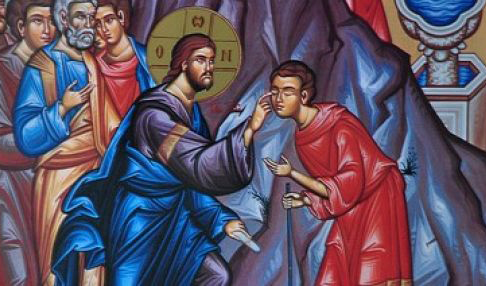
In our selection from John’s Gospel, we get a story of the healing of a man born blind that devolves into a bizarre tale of many interpretations. There is no agreement among the characters as to what has happened, let alone what it all means. What is the truth of the matter?
First the healing. Jesus encounters a “man blind from birth.” Now comes the first discussion, initiated by the disciples. Who sinned, the man or his parents?” Obviously, he’s an outcast — blind and a beggar. Definitely not favored by God according to popular theology. Sin, indeed! They completely miss the entire point of the episode – the truth of the matter.
Jesus rejects this interpretation of the man’s condition.
Remember his understanding of the accident where the tower of Siloam collapsed and killed a bunch of people. “Stuff happens.” God didn’t cause this. Deal with it — and so he does.
Whatever caused it, the fact of the matter is that this accident of birth will enable us to demonstrate God’s healing power. It is an opportunity for Grace.
The ball’s in our court. Let’s not blame the victim. Let’s be of some godly use. That is what is needed now, not a bogus theology lesson.
Jesus proceeds to heal the man. A free act of grace. No work requirement on the man’s part needed. The cure effected through a folk remedy of the time. The man followed Jesus’ instructions and washed his eyes in the pool of Siloam. He returned able to see.
Now comes the convoluted discussion among the several parties as to what has actually happened. What is the truth of this miraculous healing? The parents aver that this is indeed their son. Yes, he was born blind, but we have absolutely no idea as to how he can now see.
The neighbors consider that maybe the seeing man only looked like the guy who couldn’t see. It’s a case of mistaken identity. People born blind certainly DO NOT see anything.
The religious authorities who believe that the real sinner is Jesus because he has no theological pedigree and they don’t know where he’s from. This is woke socialism.
And of course, we the readers, know exactly where Jesus is from. Indeed, he’s from God. Geographical origin has nothing to do with origins. The truth of this assertion is his power to bring life, bring wholeness out of brokenness. To bring life out of death, to bring hope out of despair and ruination. That’s the tipoff as to where he’s from.
Meanwhile, Jesus is off stage — just as he is for us of the Jesus Movement. Not to be seen. When asked, the formerly blind man knows not where he is. And he knows not how it is that he has come to see. All he knows “I once was blind but now I see.”
At the same time those who claim to “know,” in fact know nothing. Those who have sight do not see. They refuse to recognize what is right before their eyes – a formerly blind man seeing, who now sees more than they will ever perceive. Life kindled where before was darkness. A supreme irony. The seeing do not see!
Too often, we contemporary religious “authorities” do not see. We look upon those who are hungry on the streets, who smell bad, whose clothes are dirty and our response is often most unhelpful. They should get a job. They should have paid attention in school. They were brought up by “trailer trash.” They are addicted. They have a rap sheet. They’re babbling incoherently. They’re “off their meds.” They needed to, “Just say no.” Such blame-the-victim judgementalism is proof positive that we also are those who DO NOT SEE. And that is the Truth of the situation.
Sweep these people under the rug — all convenient excuses for doing nothing. But, there’s another Truth. We can use the divine power given us to intervene with healing. In the midst of death, we can bring forth possibility, life. The very same power promised in Christ’s name. We CAN be of some earthly and godly use. That Power IS Truth — God’s Truth.
Let me tell you how some Christians made this grace-filled transition from blaming, shaming and shunning the victims cast off on the side of the road of life. Let me tell you of God’s Truth and Power one group of Jesus’ followers claimed for the healing of the world.[1]
Clarksburg is a small hamlet tucked away in the hills of West Virginia of some sixteen thousand souls. Built before the Civil War, some of the prominent congregations that provided spiritual nurture were founded in nineteenth century — Clarksburg Baptist and Christ Episcopal Church. They promoted a sense of community responsibility. During the Great Depression Christ Church had taken in many of the children orphaned by disease and hunger.
Now much of that downtown has emptied out only to be filled with hordes of addicts looking to get by anyway they could. The downtown’s storied past was long over. The glass industry, built by some of the highest quality river sand, made the plate glass windows for many of the skyscrapers in the nation. Pittsburgh Plate Glass, among other glass manufacturers, employed hundreds at good-paying, middle-class jobs.
All this wealth built those stately downtown churches. Churches, that now, were struggling to keep their old buildings heated and in repair. These congregations had dwindled to just a handful on Sunday mornings. Mostly, considering the drug plague consuming Clarksburg, they were irrelevant. Of no consequence, as they shrank into survival mode. No vibrant outposts of Christ’s life-affirming, resurrection presence here.
The addicts on the adjacent streets, in their doorsteps, were a nuisance at best. A scourge at worst. In any case, to be avoided.
Clarksburg had one famous resident, affectionately known by his patients as “Doc. O.” This was Dr. Lou Ortenzio who had opened a practice in 1978, one of a couple of new young physicians in the town — was the first to arrive in many years. Dr. O was soon overwhelmed by the patient load, seeing some forty a day.
He had discovered that the new opioid medicines would quickly solve the many pain issues his patients had. Opioid prescriptions that the drug sale reps said were completely safe and non-addictive. Under the press of all the stress, to ease his own pain, Dr. O began using them. Soon, 20 to 30 pills a day of Vicodin.
Within months, Dr. O was handing out hundreds of scrips for Oxycodone and other opioids. At the same time Pittsburgh Plate closed, along with another of other businesses. The town had begun to empty out. Businesses closed, stores stood boarded up and houses were returned to the banks, mortgages unpaid.
At some point, Dr. O had gotten a good portion of his city of Clarksburg and the surrounding countyside addicted.
Soon estranged from her husband, Dr. O’s wife divorced and moved the children to Pittsburgh. The feds now on to Dr. O, raided his office and confiscated hundreds of patient records. In 2005 he was charged with health-care fraud and fraudulent prescribing. He was subsequently sentenced to five years supervised release and 1000 hours of community service and ordered to pay $200,000 in restitution. His medical license was now gone.
Dr. O found Christ on an examination linoleum floor as a Baptist patient knelt and prayed for him to find release from his habit. He was baptized in Elk Creek. Dr. O, newly unemployed, began a job gardening, and then as a pizza delivery guy in the evenings. He later found a job working for the Mission homeless shelter. As more and more homeless overwhelmed Clarksburg, Lou Ortenzio called some of those old downtown churches to provide help.
They needed a big push – a very big push. Many of the new meth addicts had been kicked out of other places for outrageous behavior. They still smelled and were still dirty. Undesirable by any name. These congregations were focused inward and were slowly dying. Of little godly use to those outside their confined embrace.
As a freezing polar vortex bore down on the unhoused, Christ Episcopal church agreed to open as a temporary shelter. One of the local community activists, Katie Wolfe-Elton brought thirty air mattresses and organized a group of volunteers to put the shelter together. On opening night twenty-seven stragglers showed up at the church. “I’ve never been up close and personal with meth addicts,” Katie mused. As other workers left that evening, Katie was alone to run the shelter by herself.
A fellow with a purple Mohawk hairdo and tattoos across his face volunteered to help keep the bathrooms cleaned and was the only one who remained to stay and swab the floors.
He tells that sometime, “sleep deprived and wired…[he] had begun hallucinating.” Then he passed out in the snow. As consciousness faded, he noted that it was 9:30 p.m. When he awoke his battery was almost depleted and it was 4:30 a.m. He barely managed to dial 911 before passing out again. Paramedics found him by his phone signal from the tower. As he passed out he was thinking, “This is where I’m going to die.”
At this lowest of points, here begins his new life. “The light of God was shone me” and the church family took him in. Scary as he was. He says he had put the tattoos on his face to keep people away.
“Now, I opened myself up to everybody…I started practicing humble. I accepted who everybody was, good or bad. Forgave them even before they trespassed against me.”
As temperatures continued to plunge, more and more of those stand-offish congregations began to provide shelter. At Central Christian, the pastor Jeff Hanlon went to the church board and to his surprise they also opened the doors as a shelter.
Instead of throwing people out as temperatures remained below freezing even in the daylight, “a full week passed with volunteers and backpackers cooped together. They played bingo. Some refugees babbled and saw visions. Two volunteers organized karaoke sessions, singing “Amazing Grace,” “Lean on Me” and Beyoncé’s “Single Ladies.”
A film program was started later on. One of the homeless was a pianist and played classical pieces for an hour.
Soon those abandoned downtown churches were alive with Gospel-Life-Saving Grace.
At some point the fellow wandered into Central Christian church and wanted to speak to the pastor. Pastor Jeff Hanlin saw this addict with the purple hair, Norman Lowe, he wasn’t sure what he had gotten himself into.
“They talked and it took awhile, but staring into Norman’s face, Hanlin got past his stench and disturbing facial tattoos and found, behind them a soft-spoken man of surprising tenderness.”
A few few days later Norman went into detox and Pastor Hanlin visited him. As they sat at the clinic, Norman began to share all he’d lost — “jobs, his children. He remembered what it was like to play ball with the boy.”(Page 353).
As Norman continued to make progress, Jeff reported to the congregation on his progress. Many there wrote notes and cards of encouragement.
When it was time for Norman to head back home to Montana, those parishioners sent him off with bags packed with clean clothes and food for the bus trip.
What happened there in Clarksburg? Like the man born blind, those old, dying churches could only say, we “ once were blind but now we see.” Jesus may have receded into the background, yet is still present in the faith of those older retired members of those, now vibrant downtown churches.
What is the Truth of this miracle at Clarksburg, West Virginia. There are a hundred answers, all pointing to the power of God. We speak of what we know. We testify to the power we have seen.
The Risen Christ is now alive in folks there like Lou Ortenzio and Katie and all the volunteers that now fill those old stately buildings that bear Christ’s name. This Light continues to shine in the darkness and the darkness has not overcome. May it shine with some small smidgen of Glory in us who claim Jesus’ name. Amen.
[1] Sam Quinones, The Least of Us: True Tales of America and Hope in the Time of Fentanyl and Meth (New York: Bloomsbury Publishing, 2021), 57 ff. The stories of Clarksburg, WV, in three separate chapters that follow, are from the reporting of the author, who visited the city on numerous occasions over several years.
March 19, 2023, Lent 4
“Truth and Power”
The Rev. Dr. John C. Forney, St. Francis Episcopal Mission
1st Reading: 1 Samuel 16:1-3; Psalm 23;
2nd Reading: Ephesians 5:8-14; Gospel: John 9:1-41
Into the Light


Darkness conjures up all sorts of images and memories, especially from childhood. Like the absolute certainty that there really was a monster, or some creepy thing under my bed that would grab my leg the minute I put a foot on the floor to go to the bathroom in the middle of the night. No – I didn’t have a night light.
As the situation became more and more urgent, I began to bargain and calculate in my mind as to how I could leap across the fifteen feet or so from my bed without “it” getting me. Or how long I could wait. After what seemed an eternity, when urgency was upon me, I would screw up my courage, jump out of bed and rush to the bathroom. Turn on the light — Just in time!
Darkness may hold terrors, may provide the cover for secret escapades, may hold surprises and unimagined opportunities.
“Who knows what evil lurks in the hearts of men?” (Probably some women also.) The Shadow knows. I remember surreptitiously listening in my bed as my mom and aunt would tune in that creepy program most evenings out in the living room. Then have nightmares.
Darkness and night may be metaphors for hidden deeds one wishes to keep secret. Unsavory conniving of which your parents would not approve. And other activities which might transpire with a young love in the darkened “Tunnel of Love” at the pike in Long Beach. Definitely, another activity unapproved of by parents and adult chaperones.
Darkness.
In our story of Nicodemus, it is under the cover of darkness that he dares approach Jesus. This opening presents what would seem to be a very bizarre conversation.
Nicodemus is presented by the writer as one of the cultured elites. He is a ruler of the Jews with a very advanced theological education – well-versed in the intricate details and customs of his religion.
He acknowledges also Jesus’ mission as being from God – “We know that you are a teacher who has come from God; for no one can do these signs apart from God.”
Nicodemus is drawn to Jesus, but, worried about his reputation, perhaps does not want to be seen coming in daytime. In fact, each one of us approaches Jesus out of our own darkness. It is our existential human condition.
Jesus tells Nicodemus that in order to see the Kingdom of God, to see the very nature of the divine, one must be born “again” – or from “above.” The Greek word John uses here, anothern, means both.[1]
Which is to say, you will have absolutely no idea of what Jesus and God are all about when trying to understood by conventional wisdom. This is an opening to eternal life way beyond religious rules, regulations, creed and dogma.
Jesus speaks in metaphor, alluding to what he is about. It’s like the obtuse husband who hears the words his wife says but completely misses the emotional message, leaving her feeling unheard.
It’s like a bit from T.S. Eliot on a hike through the hills of England picking blueberries. “We had the experience but missed the meaning.” To approach the event from “meaning” would certainly have transformed the experience. It’s the desire to go deeper – or, in the word from John’s gospel, from “above.”
Nicodemus, being a literalist, misses all this. Just like some husbands miss the most important part of what their wife is saying – much as I did early on in our marriage, which drove Jai crazy. I didn’t “understand” her.
Now, I am sure there are some women similarly obtuse, but I can only speak for one man – myself and my experience.
As the discussion progresses further, Nicodemus is further and further from “getting” it. Dense to the max!
Nicodemus’ understanding Jesus’s teaching to be physically “born again,” is wondering how he might, as a grown man, now climb back into this mother’s womb. We go from absurdity to absurdity. He understands nothing.
Jesus, in exasperation exclaims, “You are a teacher of Israel and yet you do not understand these things?”
Nicodemus is mired in a most inadequate understanding of his religion. Like I was when stuck in my fourth-grade Sunday school theology. He misses the spiritual dimension completely. That’s because the Spirit is “like the wind. It blows where it will…you hear the sound of it, but you do not know where it comes from and where it goes. So it is with everyone who is born of the Spirit.”
For the rules-bound literalist, Nicodemus, this is way too WOKE. “Far out, man, far out!” And he would be correct. What Jesus is asking here is a matter of the heart. Get out of your head, Nicodemus!
And, that is why many of our churches are dying. Folks have lost track at a much different level of what God is all about. But there’s hope…
As Paul says, “Do not conform yourselves to the world, but let God transform you inwardly by a complete change of your mind; then you will be able to do the will of God.” That is John’s purpose in presenting the Jesus he does.
One commentator on John’s gospel states that maybe the real prologue to this work is not, “In the beginning was the Word and the Word was with God;” as majestic as that is, and as theological important as it is as a restatement of Genesis 1:1: “In the beginning God created” – there’s another introduction.
Prior to the opening, “In the beginning was the Word,” is the proclamation from the letter of John,[2] “God is Love and those who abide in Love, abide in God and God in them.” This relationship is the eternal operative principle of creation – Love – the spiritual foundation of the cosmos. The Gospel of John is all about relationship with God and with one another. That letter, First John, should be considered the real preface to this gospel.
Love – sometimes so difficult to comprehend. Like love for country. When the Former Guy visited Arlington and “blew off” visiting a World War graveyard in France he was reported to have commented to his aide that he didn’t understand why these fallen had even enlisted, let alone why they would they die for such a cause. “What’s in it for them?” Trump asked when walking among the headstones of the fallen war dead. They were “suckers.” – all quotes confirmed by his favorite propaganda station, Fox (News).
Like Nicodemus, the Former Guy could not understand anything that is beyond the hard, cold, physical stuff of the world. It’s a much higher order of existence far beyond his capabilities. It’s not hard, cold cash. As he noted, those dead were “hardly paid anything.”
It’s all about Love. “For God so loved the world…” To “believe in Jesus” is to enter into a Love relationship with God, with all creation.
That is what John alludes to in the understanding of baptism. It is to be “born of water AND the Spirit.” One is a free agent of this Spirit, going where called. But the “water” part indicates a real world, physical aspect. Real stuff pulled into a new reality by the Spirit. And, of course water might call to mind the water of the amniotic fluid as well as that used in baptism.
Let me tell how this worked out in one small community of eighteen thousand in Ohio: Portsmouth. This town on the Ohio River, across from West Virginia had fallen far from the bustling city it had been in the early twentieth century.
A shoelace factory and a couple of shoe manufacturers there produced over ninety percent of all shoelaces in the United States. They and a steel mill, and all this provided prosperity for all the other businesses and professions.
When they closed up, half the population left, tradesmen and local independent business owners. Buildings and houses stood vacant.
The story of Portsmouth is also the story of Josh Wood and others like him. Pain-pill addiction and it’s fallout soon overwhelmed the town, public services, police agencies, health clinics. “Town governance disintegrated into back-biting and recalls.”[3]
Josh had come to Portsmouth from a small hamlet in northern Ohio, Crooksville. At thirty-two he had spent much of his life addicted to heroin and methamphetamine. He’d sold his car to support this habit, and spent most of his time looking for more dope. Then he was arrested.
He had heard that the town of Portsmouth offered job training to recovering addicts, and asked to be sent there. “On paper, Portsmouth was the least likely place anyone like Josh Wood would turn to for sobriety.”[4]
On this first night, upon arriving in town Josh went to an AA meeting at All Saints Episcopal Church. It was unlike any meeting he had ever attended. Instead of the usual fifteen or so, the room was packed with almost two hundred people – folks standing and sitting along the walls and wherever. There he found something that gave him encouragement. He found Life.
A year later, Josh was no longer gaunt, and undernourished, the result of all the years of dope. He had filled out some. And he had met Tiffany Robinson, another addict who had requested to be sent to Portsmouth. Thus began a relationship unlike any either had known while using. Life was no longer grim and they had fun enjoying each other’s company.
Wood now supervised a small construction crew rehabbing abandoned buildings. He began to feel part of something. Purpose was creeping into his life. He felt a joy he hadn’t experienced for years.
He was part of a crew that installed the first ice skating rink that brought families with kids together – the first public space in Portsmouth since the public pool had closed long ago.
Part of the rejuvenation of Portsmouth was the expansion of Obamacare which for the first time covered addiction treatment. Over the objections of his own party in the legislature, Governor John Kasich, a Republican, got the state expansion of Medicaid passed.
All the old, abandoned buildings were also a big assist. “The Counseling Center refurbished and expanded into forty-eight of them.”[5] Addicts were now flooding into Portsmouth for treatment.
As more and more addicts seeking recovery arrived in Portsmouth, these folks were about as welcome as a plague of locusts. Many flooding in came for The Counseling Center (TCC). Soon eleven treatment centers were operating in Portsmouth. From this work, sober living homes repurposed a number of the stately old run-down mansions in town.
One local resident, Dale King, had returned from Iraq where his job was to train Iraqis as special forces. One way to provide physical challenges and build comradery was through strenuous exercise for these trainees. On his return to Portsmouth, discouraged at the way drugs had devastated his town and leaving a starter job he hated, Dale opened a CrossFit gym.
One of the lawyers for the Counseling Center began paying for workout sessions at the gym. Soon many that Dale King had known and despised as addicts began to show up “running, squatting, pumping, pulling themselves up. Finally, he had to learn their names.”[6] Josh Wood joined this group. The workouts released his brain’s endorphins.
The incipient economic activity downtown encouraged Dale King to open an apparel line and an all-natural skin line. In time, King had eighteen people working for him in three companies.
Another returning veteran who had spent time rebuilding Iraq, Tim Wolfe and a partner, began remodeling one of the old downtown buildings into apartments. He thought this shouldn’t be too hard – here he was not getting shot at while mixing cement. Since workers were scarce, Wolfe helped those entering sobriety pay the needed fines to reclaim drivers licenses.
Two essentials were needed for employment: a clean drug test and a driver’s license. TCC soon opened a center to help addicts pay fines to regain those licenses. They expanded into medical care.
Wolfe employed Josh, paid his fines, and set him to work rehabbing the downtown buildings, teaching others the necessary trades.
Wolfe opened a restaurant downtown, the first in years, which attracted people to a downtown that had been empty for years. Above it he renovated apartments for his workers.
Seeing all the new energy in Portsmouth, Shawnee State University opened a center for entrepreneurial training downtown. Recovering addicts were one of the two growing sectors in the city – students being the other.
Tiffany and Josh married, Josh starting his own business, “Woody’s Remodeling.” Tiffany opened her cleaning service called, “Get it Done.”
They and a whole bunch of other recovering addicts saved the day. These, the “Least of Us” … these have completely restored hope and have breathed life back into Portsmouth. Imagine that!
This is the Gospel of John’s message — Jesus is about Life. Eternal Live Now. Not after one dies. Fully alive to oneself and others right now!
Josh and Tiffany were part of a collective rewiring of the brain’s reward pathways in Portsmouth, toward enjoying again the dopamine release by what our brains had evolved to prize: exercise, moving forward, and being with others in public the way townspeople did…”[7]
The dream, the reclaimed lives and restored town – all a version of “water and the Spirit.” Those who supported recovery, those who dared to begin recovery – all a part of overflowing Love of those abiding in God.
It took real effort, work, sweat and it took those venturous souls willing to be carried by the wind of the Spirit. Beyond rules, beyond fears, beyond stunted imagination, beyond caution. That’s the message of John’s Gospel. Won’t make any sense at all to the religious bean counters.
And so it has ever been with those born anew from above. A whole bunch of recovering addicts saved themselves and the town of Portsmouth – leading this darkened, drug-infested place into the Light. Another resurrection story of “by water and the Spirit.” Indeed, a For-God-So-Loved-the-World story. Amen.
[1] Gail R. O’Day and Susan E, Hylen, John (Louisville, Kentucky: Westminster John Knox Press, 2006), 43.
[2] 1 John 4:16.
[3] Sam Quinones, The Least of Us: True Tales of America and Hope in the Time of Fentanyl and Meth (New York: Bloomsbury Publishing, 2021), 376.
[4] Ibid.
[5] Op. cit., 379.
[6] Ibid, 382.
[7] Op cit., 389.
March 5, 2023, Lent 2
“Into the Light”
The Rev. Dr. John C. Forney, St. Francis Episcopal Mission
1st Reading: Genesis 12:1-4a; Psalm 121;
2nd Reading: Romans 4:1-5, 13-17; Gospel: John 3:1-17
Out of the Depths


There’s line from the hymn we will sing today, “I will Arise and Go to Jesus,” that is so very true for me. In part it says, “If you tarry ‘till you’re better, you will never come at all.”
The fact is, we meet God out of our need, not out of our sufficiency. Out of our extremity we come. That’s my story. When my life was going nowhere, caught up in our family’s turmoil, missing class after class – only then did I take up a friend’s offer to attend a campus religious group. There, at this Wesley Foundation meeting, I caught a glimpse of a loving, forgiving God that challenged my intellect as well as my spiritual distress. Catching a fulsome vision of what God might intend for me, I kept coming back.
It is out of what is often called “rock bottom” that an addict comes to a recovery group. If there is enough desire to live, that person might catch a glimpse of an entire new way of life. But it all begins with the admission, “My name is — fill in the blank — I’m an alcoholic.” It’s the realization, too often after family has left, after the job is over, after self-respect is on empty, that one’s life is now hopelessly out of control.
This period of Lent is our opportunity to deeply consider what it is that gives life, and to choose for abundance – not in things but in connection to the Author of Life, to one another, to our deepest self.
James Baldwin tells of that afternoon, in his darkened father’s Pentecostal church, where as a young adolescent, he slowly came down the center aisle. He knelt at the communion rail and there offered himself to Jesus. As James tells it, the deal was, “Jesus knew all the secrets of my heart and would never let me find them out.”
“But he was a better man than I took him for.”
Lent is our opportunity to discover the inner secrets of our hearts, to accept that, whatever they may be, Jesus calls us into his presence – a Presence overflowing with welcome, with compassion, with forgiveness, with challenge to go deeper. Much as did that first meeting of Wesley Foundation I attended so long ago as a very lost soul. Much as the alcoholic finds at a first AA meeting.
We only have one crack at this life; my father and Jack Benny to the contrary, all of us have an expiration date. We only go around once.
As I was moving down the aisle imposing ashes with the words, “Remember that you are dust and to dust you shall return, I came to my young son. As I repeated those time-worn words, there was an audible gasp. “No, not me.”
Yes, even you my dear son. Even you. So, fill your days with love. Fill your days with connection. Hold tight to those whom you love and those who love you. Hold tight to this wondrous blue-green creation spinning through the emptiness of space. Hold on.
Remember the One who brought you to this earthly feast and honor that gift. Remember the precepts that bring true happiness and joy to you and to others – and your cup will overflow with abundance.
During Lent the journey is renewed, is sustained. Our deepest longings are laid open before God. This is church as solace, church as an opportunity to live into the fullness what is intended for each one of us. This is church as challenge to discover and fulfill your unique vocation – where your talents and deepest desires intersect with the world’s greatest needs.
Take these days, to look deep within, to dare, to reach out, to delight in the splendor of God’s creation.
I wish for you, my friends, the blessing of a Holy, Renewing Lent. Amen.
Ash Wednesday
Joel 2:1-2, 12-17; Psalm 103:4-18; II Corinthians 5:20b-6-10;
Matthew 6:1-6, 16-21
“Out of the Depths”
Preached at St. Francis Outreach Center, San Bernardino
The Rev. Dr. John C. Forney
February 22, 2023
Bright Shiny Beads


Out of the fifties, I beg your pardon of an old man’s trip down a musical memory lane – on the hit parade years ago was a most infectious song: Baubles, Bangles, Bright Shiny Beads. Those old enough will remember:
“Baubles, bangles, all those bright, shiny beads
Sparkles, spangles, your heart will sing, singa-linga
Wearin’ baubles, bangles, and beads
You’ll, you’ll glitter and gleam so
You’re gonna make somebody dream so…”
Sung by the Kirby Stone Four, this single made its way onto the top Hot 100 in 1958.
Initial attraction helps, but baubles, bangles, sparkles and spangles isn’t much of a guarantee for choosing a lifetime soul mate. What counts is the inner sparkle. The spangles of a vibrant soul.
One of the commercials for on-line senior dating shows a well-preserved, perfectly coifed older woman saying that she wouldn’t even know where to begin to start dating again at her age. The announcer says, just go to our service, open it up and start looking. Then shown in the ad, the woman is looking through pictures of handsome older men.
Crazy. Let’s see…the first two could be child molesters, then an ax murderer…maybe the next three are deadbeats and finally an income tax dodger. Or maybe a war criminal. It’s like my friend who was on her third husband or boyfriend. I asked where did you meet these guys. “In a bar,” she replied. Hmmmm…something wrong with the selection process here, ya think?
Today we celebrate some spiritual baubles and bright shiny beads. At least that is how, upon the mountain several of Jesus’ followers glimpsed him. Dazzling, sparkling, Christ of the Bright Shining Mount of Transfiguration.
Most commentary focuses on Jesus and his appearance in that episode, but one writer suggests that the focus might better be held on those accompanying him. It may be that the critical transformation is in them, their luminosity.
Irenaeus writes, “The glory of God is a man, a woman, fully alive.”
Let’s consider that this life changing moment which takes place in Jesus’ companions might be what is critical. What they perceived of the Risen Christ is inserted back into the story by the gospel writers. This written by those who themselves had been transfigured.
And what had they perceived? In Jesus, the presence of the totality of God’s revelation was at hand – God’s will for all creation. This is what Moses and Elijah were all about – the embodiment of Torah-Truth. In this bright shining moment, the power of both Torah and Gospel are present.
“Same Truth, More Light,” just as last Sunday.
That is the divine will for all creation, that we become fully alive, fully available to one another, fully available to the movement of the Holy Spirit in our midst. Fully in harmony with our place in the cosmos.
One of my friends thinks all this is too hopeful. Too illusory. It’s delusional — that too often, we preachers are living in an unrealistic fantasy world of the “Big Rock Candy Mountain.” Preaching a gospel of fluff. And if it’s about being a glass-half-full person, then I plead “guilty.”
But from the witness of Christ through scripture and the blessing of the community of faith, from time to time, in moments, we do catch a glimpse of Holy Delight, Utmost Fulfillment. Love Incarnate.
One of my favorite authors, John Updike in his series of novels about Harry Angstrom, nicknamed “Rabbit,” follows his rise from late adolescence to become a modestly successful, respectable suburban businessman in the fifties. Though Rabbit has all the amenities and outward signs of success, he is most alone. In his emotional isolation, he is granted only a few moments of complete satisfaction, moments he might identify as a glimpse of the Holy:
For Rabbit, it is a perfect golf shot right down the fairway, the soft, round curve of a woman’s bottom, a successful business deal inked and signed.
These moments of sheer delight, of perfection, when we’re fully alive, when we inwardly sparkle, are indeed fleeting, but somehow make it all worthwhile.
You know them, a lover’s lingering embrace, the smell of Jai’s meatloaf, mashed potatoes and gravy – (actually, we make it together). The satisfaction of having made another’s day brighter, of working with dedicated team members on a project not one of us could have possibly done alone; a hymn that stirs the soul; the joy of giving to a cause at the moment of need.
And if you doubt the importance of those soft curves and that lingering embrace, go back and re-read the Song of Songs. It’s the one your Sunday School teacher might have skipped over, the one that might be up for being banned in some school libraries.
Various, fleeting glimpses of God’s Goodness, moments of vibrant Life – Life Abundant, if you will.
Recently, I saw a film that especially speaks to those of us who are getting on in years, especially us men who too often have lived rigidly prescribed, structured and baren unemotional lives.
The main character, Mr. Rodney Williams, played by Bill Nighy – definitely an award-winning performance — is a mid-level functionary in the government bureaucracy of the City of London. He is most unapproachable. Those who work under him are terrified of what his disposition might be on any given morning.
One afternoon, he is told by his doctor that his tests have come back and the news is not good. The cancer has spread and he has maybe six or nine months left to live at the most.
He is found that night sitting alone in the darkened living room by his son and daughter-in-law as they return from their work. As they prepare to rush upstairs and busy themselves with dinner and reading the paper, he hesitantly asks, “Could you sit awhile.” Of course, they can’t. They never have.
They are too busy, leaving the old man alone in the dark, most alone, as he relives various pivotal moments in his mind. His wife is long since deceased, he really has no friendships at work or anywhere else to speak of.
Dinner that evening is an emotional disaster, everyone walking on eggshells – completely disconnected from one another.
Eventually, he is able to share his diagnosis with one young woman who had worked at a desk adjacent to his, Miss Margaret Harris, played by Aimee Lou Wood. She has moved on to another job but he has looked her up. Enter also three women have been imploring his Office of Parks forever to turn an old abandoned trash-strewn parcel of land in their neighborhood into a park.
Mr. Williams becomes alive, maybe for the first time in his life, opening up emotionally to this young woman and also taking on the cause of this neighborhood park. He is now a man with a mission.
Go, see that film. And take lots of Kleenex with you and someone who cares for you.
This is a Gift of Life that is celebrated in this film. It is a perfect moment of spiritual renewal, of godly joy and deep pathos. This is the sparkle and bright shiny that radiated from Jesus, that radiated from all his followers infected with Transfiguration.
Too optimistic? Delusional? Unrealistic? I think not! It doesn’t mean that there is not tragedy. It does not mean that we do not suffer the evil of these days.
Yet in the midst of it all, we are granted fleeting glimpses of the Holy, available from time to time if we’re fortunate to behold them. If we’re paying attention.
It’s hearing the first cry of your newborn child. It’s that a life partner said, “YES.” It’s those Northern Lights flashing across the sky on a frigid winter night in Alaska. It’s unexpected flowers. The radiance of a smile. The greeting of an old friend. It’s that “you passed your Greek exam – by the skin of your teeth, Forney.”
In an instant, all is Transfigured – Jesus and we, the Church, however slowly. To our surprise, we find ourselves standing on Holy Ground. The message itself is Holy Luminosity. All is changed. Most of all, we ourselves.
What’s the alternative? I’ll tell you what’s the alternative. It’s no future. To live without hope, we end up like Jim Jones and his People’s Temple followers out in the jungle of Guyana drinking the Kool-Aid – a nihilistic, embittered end of self-destruction. Hell.
We can end up as zombies worshipping the so-called free market as wage slaves – in a winner-take-all dead-end future. Yes, the Former Guy was right about one thing, the system is “rigged.” If your parents were poor, chances are overwhelming that you, too, will die in poverty. Or die a “death of despair” – addiction, alcoholic liver failure or suicide. At a relatively young age. The youngest I buried was only nineteen years old. That rat-race existence will suck your soul out of your being if you let it. That’s what alcohol did to him.
Dante in his epic poem, The Inferno, describes the furthest reaches of Hell not as a place of flames but as a frozen, baren wasteland — a place where all souls, in icy rigidity are utterly cut off from one another. Utterly alone. That’s the Hell of NOT living.
Go see the movie. By the way, the Laemmle Theater needs your support if you live near Claremont. The bling will be in your soul. That’s the “fully alive” God intends.
This Transfiguration Sunday, the gift awaiting all are those inner bright shiny beads. Beats the Hell out of “despondent” and “down in the dumps.”
As we live connected to others, to our deepest selves, to our Maker, we become the ones who glitter and gleam so. As we live for others, we’re the bright shiny beads. We, surrounded in the splendor of those fully alive, are the Glory of God. True and Transfigured.
With the approach of Ash Wednesday, let us prepare to enter a Holy Lent. A time of reflection and renewal. And go see the movie, “Living!” And take a moment to “sit awhile” with someone who needs you. Amen.
February 19, 2023, Epiphany Last
Transfiguration Sunday
“Bright Shiny Beads”
The Rev. Dr. John C. Forney, St. Francis Episcopal Mission
Genesis 2:15-17; 3:1-7; Psalm 2; Peter 1:16-21; Matthew 17:1-9


